Netflix Thumbnails Can Turn One Movie Into Three Genres
Netflix does not show every viewer the same movie poster. Its personalized artwork sells a title through your viewing history, changing the promise before the film starts.
August 11, 2026 · 8 min read
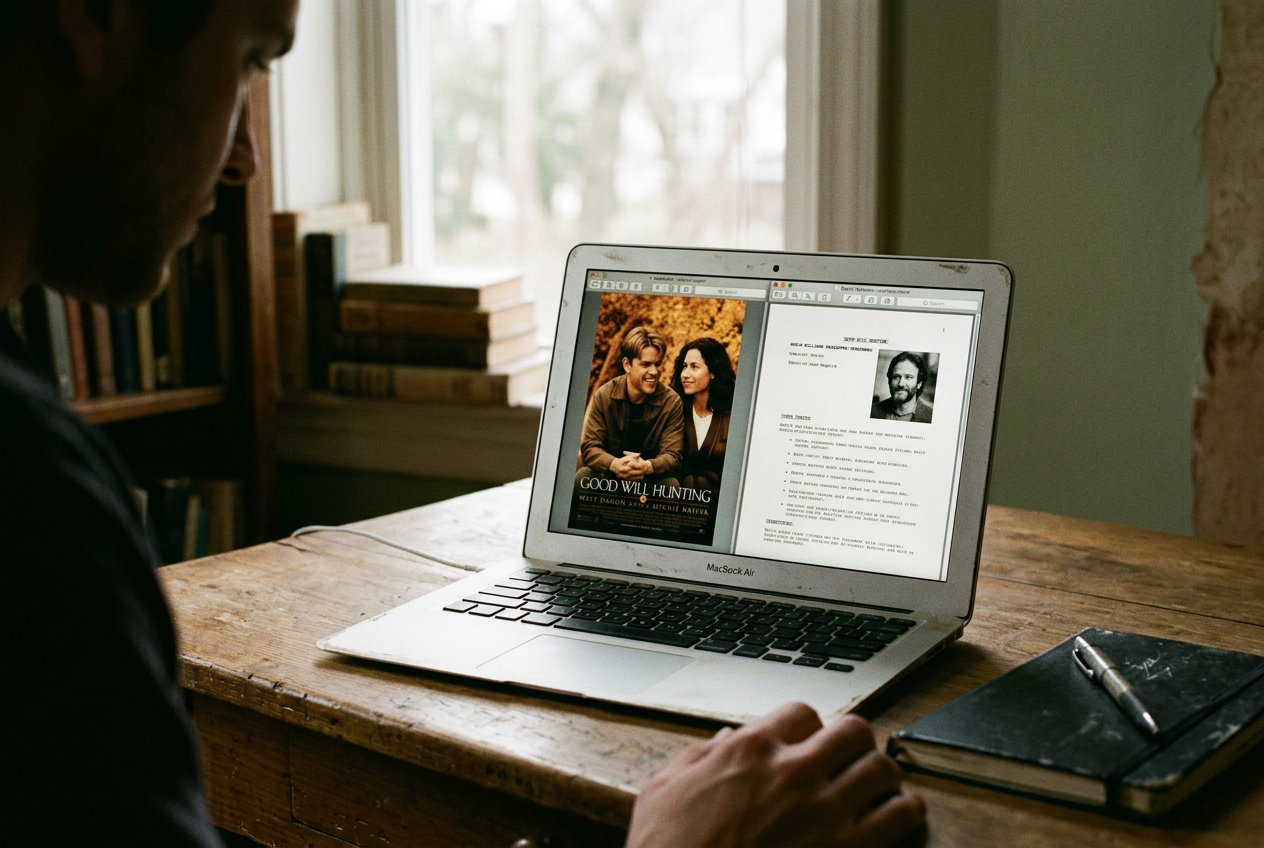
Two thumbnails can split one movie before either viewer presses play. In Netflix’s own explanation of artwork personalization, a member drawn to romance might see Good Will Hunting represented by Matt Damon and Minnie Driver, while someone with a history of comedy might get Robin Williams. The first image sells intimacy. The second sells a familiar comic performer, even though Williams’s role is restrained, wounded and far from the broad comedy his face might imply.
The person hurt by that split is the viewer, who no longer receives a stable public promise about what the movie is. A theatrical poster can mislead, and frequently does, but at least it misleads in public. Netflix’s thumbnail makes a private pitch assembled from the platform’s model of you. Your version of Good Will Hunting can arrive as romance, comedy or respectable character drama, depending on which visual evidence the system expects will move your thumb.
That is more than a marketing variation. It changes the poster from a piece of film culture into an input for ranking and conversion.
The poster used to stay put
A movie poster has never been neutral. Studios emphasize stars, hide inconvenient tones, enlarge minor characters and sand off anything that looks difficult to sell. International distributors use different artwork. Home-video covers can reposition a flop years later.
None of this deserves nostalgia.
Still, the familiar theatrical artwork for Good Will Hunting made one claim to a broad audience. Damon and Driver occupied the romantic foreground, Williams signaled adult authority, and the title’s serious blue composition placed the film inside the prestige drama market that funded and rewarded it. A viewer could reject that promise, argue with it or recognize it across a video store, newspaper review and bus shelter. The image became attached to the object.
Netflix breaks that attachment at account level. Its 2017 Technology Blog documentation described a system that selects among multiple pieces of artwork for a title using information about a member’s tastes. Artwork personalization means the platform predicts which approved image is most likely to make a particular viewer engage with the title. The film stays fixed.
The sales argument moves.
For Good Will Hunting, the difference between Damon with Driver and Williams alone is not cosmetic. Each image activates a different genre expectation, and genre expectation determines what the viewer notices once the movie begins: a romance thumbnail makes the relationship feel central, while Williams’s face suggests that his performance is the organizing attraction. The same scenes now have to settle a debt incurred by different advertisements.
How Netflix tests the image
Netflix first needs candidate artwork. These are approved images associated with a title, commonly built around different characters, relationships, settings or tonal cues. The artwork system then chooses among those candidates rather than generating a new poster for every member. Netflix’s public documentation presents that choice as a prediction problem: given what the service knows about an account and what it has learned from previous image displays, which candidate should appear here.
Testing supplies the answer. In an A/B test, a platform divides eligible users into groups and compares how different treatments perform. Artwork makes this harder because the system cannot learn much about an image it rarely shows, while an early winner can collect more exposure merely because it has already been favored. Netflix’s technical writing discusses contextual bandits, algorithms that balance showing the apparent best option with gathering evidence about alternatives under particular viewing conditions.
That distinction matters. The system is not conducting a seminar on which image best represents the film. It is looking for a useful match between artwork and behavior, inside an interface where the title has already been placed among competing rows, cards and recommendations. A thumbnail that produces engagement can win without being the most accurate summary of tone, structure or importance.
The artwork also exists inside a page, not in isolation. Netflix has documented the problem of showing the same actor repeatedly across a screen, which can happen when several recommendations lean on the performer most likely to attract one member. The service can account for that surrounding context when selecting images. Your Good Will Hunting card therefore competes not only with its alternate artwork but with every nearby face, color field and title demanding attention.
This is why personalized artwork belongs to the recommender system rather than merely the marketing department. The recommendation decides that a title deserves space; the artwork helps determine how that recommendation is expressed. One system supplies the product. The other selects the argument.
Accuracy is not the objective
Netflix has an obvious reason to do this. Subscription streaming removes the individual ticket price from each choice, but it does not remove risk. Starting the wrong movie costs time, and a page full of uncertain choices can send a subscriber out of the app. Artwork reduces that hesitation by making a title resemble something the platform already believes the member likes.
The company benefits when the catalog feels legible and personally relevant, because a service that appears to have nothing worth watching becomes easier to cancel. The thumbnail is cheap compared with commissioning a film or acquiring rights, yet it can alter how that expensive inventory performs. Netflix’s brand documentation does not describe a special payment to a filmmaker or performer when their face wins an artwork test. The commercial value flows first to the platform, which learns how to package the same licensed asset for several predicted appetites.
Accuracy can overlap with that goal. A romance-oriented image for Good Will Hunting is not fraudulent; the relationship between Will and Skylar matters. Williams is central too. The manipulation works because the film contains enough valid material to support each pitch, while the thumbnail strips away the proportions that would tell a viewer how those elements coexist.
Three genres can therefore emerge from one movie without Netflix changing a frame. Crop toward the couple and the film becomes a romance. Lead with Williams and it borrows the accessibility of star comedy. Retain the ensemble and sober prestige cues, and it reads as an awards drama.
Each version contains evidence. None carries the whole contract.
What disappears with the common poster
The first loss is comparability. Two people can recommend the same Netflix title while remembering different visual objects, and neither may know personalization occurred. Unlike a trailer cut for a particular television slot, the alternate image is usually not presented as an alternate. It arrives as the title’s face.
That weakens a small but useful part of criticism. Posters give viewers shared material for judging how a distributor positioned a movie, which characters it considered saleable and which audience it expected to pay. When the image changes by account, the marketing decision becomes harder to inspect. A critic can analyze one thumbnail without knowing how many other promises circulated privately.
The second loss is surprise. Recommendation systems often advertise novelty through familiarity: the unfamiliar title receives the face, relationship or tonal signal most compatible with prior behavior. That can get a difficult film started, but it also turns ambiguity into friction to be removed. A movie capable of exceeding genre becomes easier to enter only after the service has compressed it back into genre.
Then there is the model’s version of the viewer. Artwork personalization does not need to understand why someone watched several romantic movies, whether they enjoyed them, shared an account or merely fell asleep during one. It needs patterns useful enough to make another selection. The image feels personal because it reflects a statistical neighborhood, not because Netflix has developed taste on your behalf.
The Matt Damon and Minnie Driver thumbnail is concrete evidence of that bargain. It may help someone find Good Will Hunting. It also withholds Williams as part of the initial proposition, just as the Williams treatment can understate the romance and sell a performance through associations the performance itself complicates. Personalization gains a click-sized advantage by making the movie narrower.
A poster can be useful without pretending to be fixed
Netflix could make the mechanism more visible. It could label personalized artwork, let viewers inspect other approved images or offer stable key art as an account setting. None of those changes would prevent recommendation. They would expose where the recommendation ends and the sales treatment begins.
The harder alternative is restraint. A platform can test artwork while requiring every candidate to preserve the title’s dominant tone and narrative balance, though that would sacrifice some of the exaggerated distinctions that make testing commercially useful. It could also treat shared recognition as valuable, rather than measuring an image mainly through immediate behavior.
For now, the personalized thumbnail remains an invisible edit made before the movie. Netflix has not recut Good Will Hunting. It has recut the expectation, assigning Damon and Driver to one account and Williams to another, then leaving the film to explain why neither image was the complete story.
Questions people ask
Why does
Netflix show different thumbnails to different people?
Netflix selects from approved artwork using predictions about what may appeal to an account. Viewing behavior and the context of the page can influence which image appears, according to the company’s technical documentation, so two subscribers may receive different visual pitches for the same title.
Does Netflix test every movie thumbnail?
Netflix publicly describes artwork testing and personalization as parts of its recommendation machinery, but its documentation does not establish that every title receives the same number of candidates or the same treatment. Artwork availability, rights, title prominence and the evidence gathered from previous displays can limit what the system selects.
Are personalized Netflix thumbnails misleading?
They can be accurate in a narrow sense while distorting proportion. Good Will Hunting contains romance, comedy and drama, but artwork centered on one relationship or performer can imply that element dominates, giving the viewer a genre promise the complete movie never agreed to keep.
Can viewers turn off Netflix artwork personalization?
Netflix does not present a standard viewer control dedicated to disabling personalized title artwork. A subscriber can manage recommendation-related data in other ways, but the practical result is that the selected thumbnail usually appears without a visible notice or an option to restore one shared poster.
One update a day
Today's story, in your inbox
One story each morning — no hype, no filler, no algorithm deciding for you.