New Jersey Police Video Is Public Until You Try to Use It
Body-camera footage can be visible without being meaningfully available. New Jersey’s streaming releases preserve agency control while making outside scrutiny slower, costlier and easier to lose.
August 11, 2026 · 8 min read

Open the official release package for the police killing of Najee Seabrooks in Paterson and the state’s preferred meaning of access becomes clear. The recordings are there to be played. They are not presented as a clean evidentiary set that a reporter, attorney, researcher or resident can readily download, preserve and compare.
Seabrooks, a violence intervention specialist experiencing a mental health crisis, was killed by Paterson police in March 2023. The New Jersey Attorney General’s Office later released recordings from the encounter as part of its investigation. That publication mattered. So did the container.
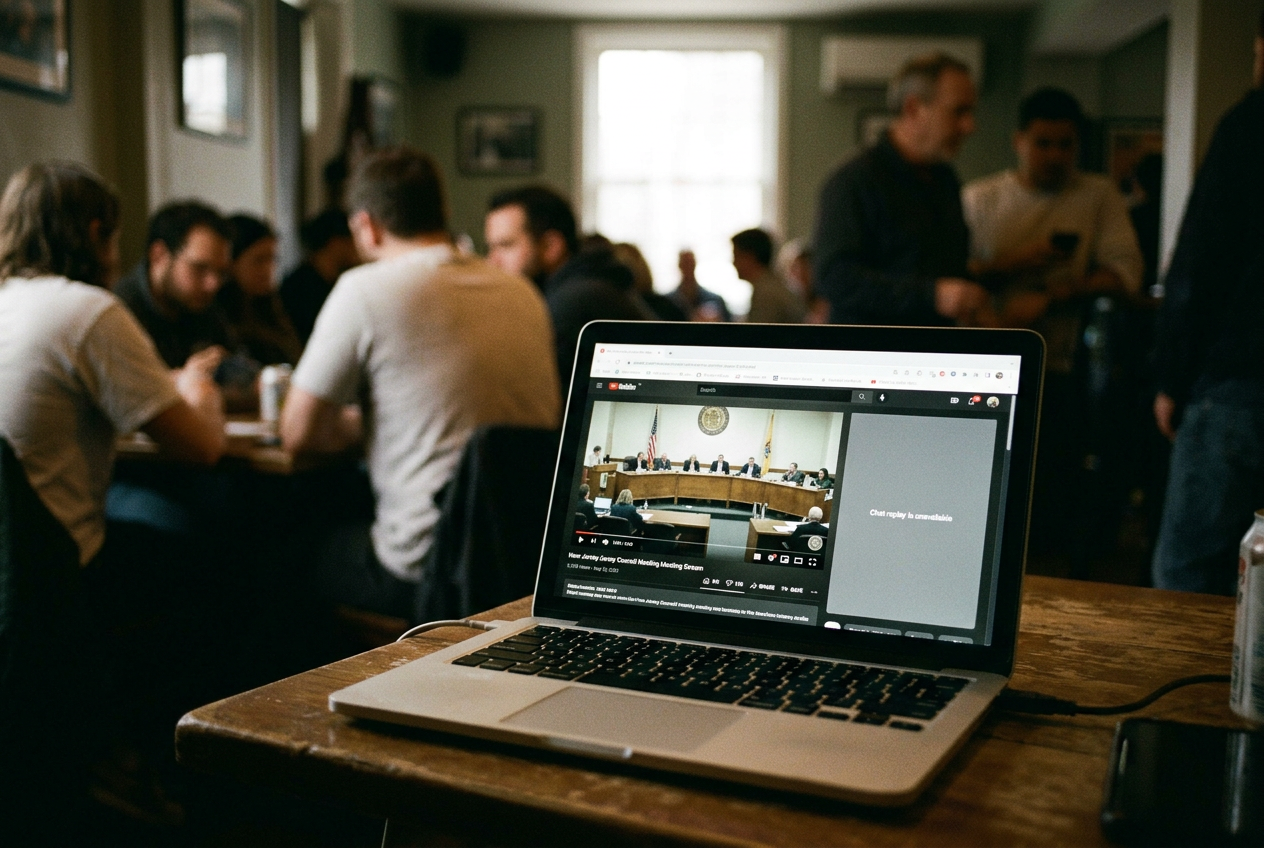
A streaming player invites sequential viewing on the government’s terms. A reusable file permits different work: slowing a passage without relying on a website, synchronizing officers’ perspectives, inspecting frames, checking edits, extracting short clips for reporting, and preserving the material in case the hosted version changes or disappears. One is public relations with evidence attached. The other can support verification.
The distinction sounds technical because institutions benefit when ordinary friction is mistaken for technical necessity.
The player is part of the statement
New Jersey’s body-camera system grew from a familiar accountability bargain. Officers would record encounters, agencies would retain the footage, and the resulting images would provide a check on official accounts. Yet the camera never governed itself. Police decide when recording begins, evidence systems retain the files, prosecutors oversee sensitive releases, and public agencies choose the format in which outsiders encounter them.
The Seabrooks package sits at the end of that chain. By then, the state has selected the recordings, applied redactions, exported copies and placed them inside a publication system. Redaction means obscuring information to protect privacy or comply with law, and some of it is plainly warranted: a person’s medical crisis, a child’s face or the interior of a private home does not become public property because an officer entered with a camera.
But privacy does not require a streaming-only interface. It does not require burned-in agency branding, which permanently places a visual mark over the image. It does not require stripping useful file information or withholding a direct download of the redacted copy already approved for public viewing. Those are distribution choices.
The official player also turns time into a quiet access fee. A viewer can sit through each recording and take notes. A newsroom attempting to align several perspectives needs local copies or a screen-capture workflow, followed by checking that capture against the source. A public defender or civil-rights attorney may already have formal discovery routes, but residents, independent journalists and community groups do not inherit those tools merely because a video can be watched in a browser.
You can see the footage. You cannot necessarily handle it.
Publication is not production access
The state’s critical-incident releases and the public channels used by departments including Newark and Paterson commonly route viewers toward embedded players, social video platforms or edited briefing packages. These systems differ, but they tend to collapse two separate ideas: publishing an official account and releasing a public record.
An edited briefing is a government-produced story. It may combine narration, selected body-camera passages, dispatch audio, captions and maps, all arranged to explain what authorities say happened. Such a video can be useful, particularly when several officers and locations are involved. It still reflects editorial decisions made by the institution whose conduct is under examination.
A body-camera file is different. Even after lawful redaction, it can retain continuous timing, audio transitions and perspective that an edited package compresses. Transcoding, the conversion of a video into another compressed format, can soften detail and alter the file’s technical characteristics. A watermark may cover a hand, an object or a timestamp.
Missing metadata, the information stored alongside a file about its creation and encoding, makes later authentication and comparison harder.
None of these obstacles automatically conceals misconduct. That is too easy a claim, and usually impossible to prove from interface design alone. The mechanism is duller and more durable. Each obstacle raises the cost of checking the institution’s work, while imposing little cost on the institution itself.
Return to the Seabrooks recordings. The important public task is not merely watching a frightening encounter once. It is comparing what officers could see and hear at particular moments, distinguishing simultaneous events from sequential ones, and testing later official descriptions against the recorded material. A player supports spectatorship.
Scrutiny needs files.
The watermark keeps an owner in the frame
Agency watermarks are often defended as provenance markers, meaning signs that identify where material came from. Provenance matters. A clip detached from context can travel through social media with a false caption, altered speed or missing beginning. Police footage has become feed material, and feeds reward the fragment that produces the fastest judgment.
A burned-in watermark is a crude answer. Better publication would pair a minimally obstructed redacted file with a cryptographic hash, a digital fingerprint that changes if the file changes, plus a release note identifying edits and the duration of any removed section. That would make authenticity testable without placing a department logo across the evidence.
Watermarks also express ownership. The image may show a resident’s worst day, inside the resident’s home, captured under state authority and stored with public money, yet the department’s insignia remains visually dominant when the clip is quoted elsewhere. The public receives permission to circulate the government’s version, carrying the government’s label.
Streaming platforms add another dependency. A video embedded from a commercial host remains subject to that host’s interface, account rules, compression and removal systems. An offline viewing option, where offered, is not the same as an editable file saved for archival use. Researchers cannot assume a link will remain stable, and a citation that points only to a mutable player is weaker than one tied to a named file with a checksum and release log.
The archive becomes rented space.
Friction protects the institution
New Jersey law treats body-camera recordings as government records while allowing exemptions and redactions for privacy, safety and active investigations. Litigation has repeatedly been necessary to define what agencies must release and who bears the cost. In a major state Supreme Court decision concerning police video, the court rejected an attempt to shift extensive review and redaction costs onto the requester under the circumstances before it.
That matters because fees can function as denial without producing the paperwork of denial. So can delay. A request may be legally granted after exchanges about scope, exemptions and redaction, while the news cycle passes and the requester spends hours managing a record that the agency already stores in an evidence system built to retrieve and export it.
The commercial layer is rarely visible in the release page. Police departments pay vendors for cameras, cloud storage, evidence management and automated redaction tools. Those contracts solve a real administrative problem created by the volume of footage. They also encourage agencies to treat access as a feature controlled inside proprietary software rather than a public obligation designed from the requester outward.
The public pays at both ends. Tax dollars fund capture and storage. Requesters then supply unpaid labor to locate, preserve and reconstruct what the publication interface will not hand over cleanly. Larger newsrooms and legal organizations can absorb that cost.
A neighborhood group examining one police encounter may not.
This is why the Seabrooks release package matters beyond Paterson. It shows how an agency can disclose consequential footage and retain practical control over its afterlife. The government chooses the copies, the markings, the host and the route through which the public encounters them. Formal access survives.
Reuse becomes a favor.
A better system is not complicated. Publish the redacted files already cleared for viewing through direct, durable download links. Keep an unaltered preservation copy. List every redaction and edit.
Attach hashes, filenames, recording durations and stable identifiers. Offer the edited explainer separately, labeled as an agency production rather than the record itself.
That would still leave disputes over what was withheld. It would at least stop pretending that pressing play completes the work of public accountability.
Questions people ask
Can the public request New Jersey police body-camera footage?
Yes, but access depends on New Jersey public-records law, body-camera statutes and exemptions covering matters such as privacy, safety and ongoing investigations. Agencies may redact releasable footage. A request can succeed legally while remaining slow in practice, especially when several recordings require review.
Why is streaming access different from downloading the video?
Streaming lets a viewer watch through an agency-controlled or commercial player. A downloadable file can be archived, synchronized with other recordings, inspected frame by frame and quoted in independent reporting without relying on a mutable webpage. Offline playback inside a platform’s app does not provide the same control.
Are police watermarks necessary to authenticate footage?
No. A visible mark can identify the releasing agency, but it may obstruct details and does not prove that a file is complete. Agencies can publish hashes, stable filenames, edit logs and release notes, which provide stronger ways to verify whether a copy has changed.
Who pays when footage is difficult to reuse?
The requester does. Journalists, attorneys, researchers and residents spend time capturing streams, checking copies and reconstructing timelines, while public agencies and their evidence vendors already possess export tools. In the Seabrooks package, the practical burden begins after the state has declared the footage public.
One update a day
Today's story, in your inbox
One story each morning — no hype, no filler, no algorithm deciding for you.