Police Body-Camera Footage Is Evidence. The Release Is an Edit.
The camera records an encounter. Police decide which recording leads, where it stops, what gets blurred and who explains it before viewers can draw their own conclusions.
August 11, 2026 · 8 min read
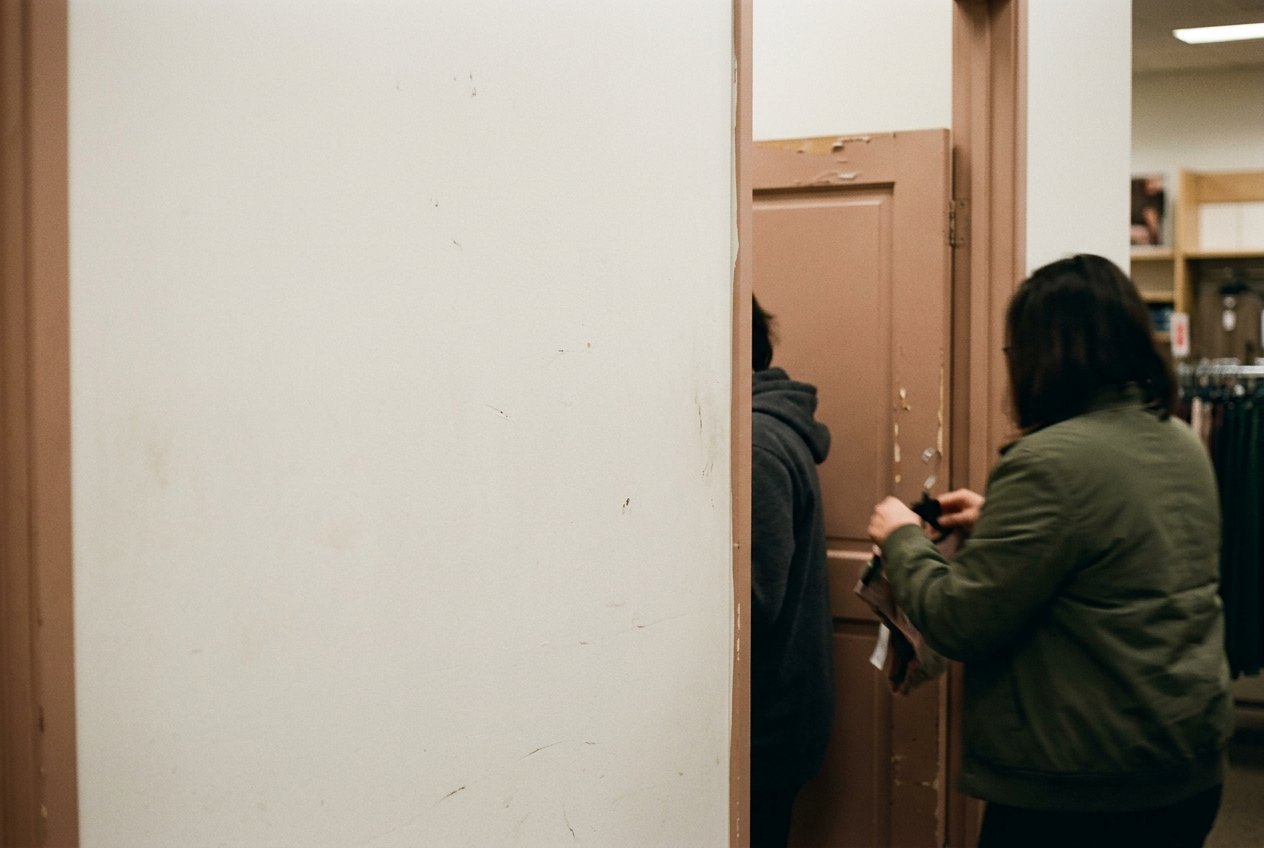
In December 2021, Los Angeles police entered a Burlington store in North Hollywood after reports of a man attacking shoppers. An officer fired his rifle at the suspect. One round passed through a dressing-room wall and killed 14-year-old Valentina Orellana-Peralta, who was hiding inside with her mother.
The wall matters. On the officer’s body-camera recording, it looks like part of the store: drywall beyond the suspect, outside the camera’s field of knowledge. In the physical world, it separated an armed police officer from a child. In the Los Angeles Police Department’s public release, viewers reached that wall only after the department had organized surveillance footage, emergency calls, explanatory text and selected body-camera recordings into a “critical incident community briefing.”
The footage was official. The briefing was editorial.
That distinction tends to disappear once a police video starts circulating. A television station embeds the department’s upload. A platform extracts the most violent seconds. A headline calls it “the bodycam,” singular, even when several officers were recording and store cameras captured angles the uniforms could not.
By the time most viewers press play, the state has already made the first cut.
A recording becomes a package
A body camera does not produce one complete view of an encounter. It produces a file tied to one officer’s position, movement and decision to activate the device, with a wide-angle lens that can distort distance and a microphone that may capture sounds the wearer did not notice. Other officers generate other files. Dispatch systems hold radio traffic.
A store or neighbor may have surveillance video. Written reports arrive later, after officers know how the encounter ended.
Before publication, police personnel collect some of those materials and decide what belongs in the public package. They may synchronize recordings, trim dead time, add timestamps, freeze frames or captions, and redact portions, meaning they blur images or mute sound to protect identities or information the agency says should not be disclosed. A spokesperson may narrate the sequence before the viewer sees any unbroken recording.
Each choice can be defensible on its own. A child’s face should not become permanent platform inventory because a police officer walked past. A dying person’s body does not need to be replayed for clicks. Witness addresses and private medical information can create fresh harm.
The problem is not that every release contains edits. The problem is that necessary redaction and institutional storytelling arrive inside the same finished product, while the department presents the whole thing with the authority of evidence.
In the Burlington briefing, surveillance footage established Daniel Elena Lopez’s violence inside the store. Emergency calls conveyed fear and incomplete reports about what weapon he might have. The officer’s camera then placed the viewer behind police movement through the aisles. This sequence made the shooting legible as a rapidly escalating response to a dangerous man.
Then came the dressing-room wall.
The child behind it could not appear in the officer’s viewpoint before the bullet reached her. That is a limit of the recording, not proof that her presence was unforeseeable or irrelevant. Yet point-of-view footage encourages viewers to adopt the camera wearer’s information as the event’s full informational boundary. You see what the officer saw, at the speed the officer moved, after the department has told you what kind of incident you are about to watch.
Narration gets there first
Police briefings often begin with language stressing that an investigation remains active and that the released material does not represent every piece of evidence. That disclaimer is prudent. It also does little to undo the structure that follows.
Narration supplies verbs, categories and chronology before viewers can form their own. A person “advances.” An officer “responds.” A weapon is “believed” to be present.
Video then appears to illustrate those statements, although the recording may support several interpretations or leave the decisive point outside the frame. This is a familiar documentary technique. Police do not become neutral editors because the footage came from a government camera.
The department also knows more at publication than the officer knew during the encounter. Editors can move between 911 calls, store surveillance and body cameras, creating an all-seeing account while asking viewers to judge the shooting from one officer’s limited perspective. Information can be added when it supports the police response, then excluded from the reasonableness analysis when it did not reach the officer in time. The package shifts vantage points without always announcing that the standard has shifted too.
Later reviews of the Burlington shooting did not produce one institutional answer. The Los Angeles Board of Police Commissioners found the officer’s tactics and shooting out of policy. The California Department of Justice later declined to pursue criminal charges after reviewing whether prosecutors could prove a crime beyond a reasonable doubt. Those outcomes address different rules and burdens.
Neither converts the LAPD’s briefing into a binding finding.
That is the legal distinction worth keeping. A department video can contain material that becomes evidence, but the edited upload is public communication. It does not decide whether force complied with policy, whether prosecutors can establish criminal liability, or whether a civil court should impose damages. The logo in the corner gives it provenance, not a verdict.
Disclosure law does not direct the cut
California law gives the public access to recordings from specified critical incidents, including police shootings, subject to permitted delays and redactions. Under the California Public Records Act, agencies can withhold or obscure portions for reasons such as privacy, witness safety or an active investigation, although those claims face statutory limits and can be challenged in court.
What the law generally does not dictate is the viewing order on YouTube. It does not require that the longest continuous body-camera file appear before the chief’s introduction, that every synchronized angle receive equal prominence, or that the department distinguish visually between a factual caption and its own interpretation. Disclosure rules govern whether records must be made available. They rarely govern the rhetoric of the premiere.
That gap works for departments because public judgment moves faster than formal review. Records litigation can take months or longer. Redaction requires staff time and software, and agencies point to that workload when requests pile up. Newsrooms, meanwhile, need usable video on deadline.
The official briefing arrives titled, compressed and ready to embed, funded by the same public that paid for the cameras, storage systems, officers and communications staff.
The cheap version of transparency is a link. The expensive version is a record system that lets people locate all responsive files, understand what was withheld, compare synchronized views and download material without accepting the agency’s narrative order. Departments have strong incentives to provide the first and call it the second.
Publication finishes the edit
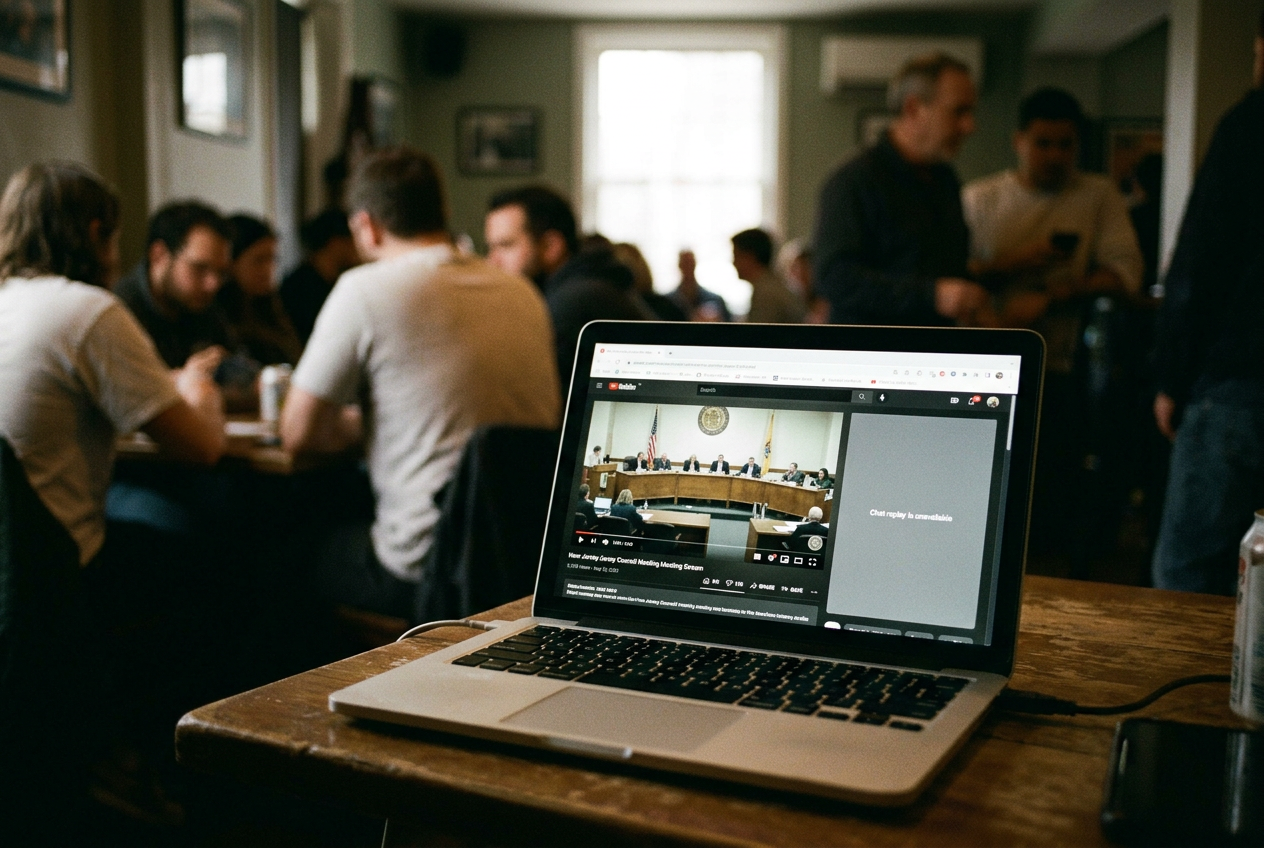
Once uploaded, the package enters another selection system. YouTube ranks the official video, news outlets cut shorter excerpts, and social accounts isolate the instant before gunfire because that is the segment people replay. A content warning may protect viewers at the start of the full release while doing nothing for the clipped version that autoplays elsewhere.
The department does not control every later edit. It does control the clean source from which many later edits are made, as well as the title, thumbnail, opening explanation and first set of searchable terms. An agency can publish additional files on a records portal, but most viewers will encounter the narrated video that search engines and broadcasters can identify immediately. Availability is not prominence.
This is where the dressing-room wall returns. In a viral clip, it is background. In the physical investigation, it is trajectory, construction and distance. In policy review, it belongs to questions about firing a rifle inside a crowded store toward a barrier whose other side was unknown.
The same patch of drywall carries different meaning depending on where the editor begins and stops.
A better release would separate disclosure from advocacy. Agencies could publish an index of every recording, identify each omission, provide synchronized files where privacy law permits, and label narration as the department’s preliminary account rather than letting it blend into the evidentiary material. An independent inspector general, civilian oversight body or records office could control publication after a police shooting. That costs money and time.
So does maintaining a communications operation designed to win the first news cycle.
Body cameras were sold as witnesses that police could not influence. The device may record automatically, but public meaning does not. Someone chooses the angle you meet first. Someone writes the caption.
Someone decides how long you look at the wall.
Questions people ask
Is released police body-camera footage raw evidence?
Sometimes an agency publishes a long, minimally altered file, but public releases commonly include redactions, trimmed sections, captions or synchronized clips. The underlying recording may become evidence in an investigation or court case. A narrated department briefing is a separate publication and carries no binding legal conclusion.
Why can police redact body-camera video?
Public-records laws often permit limited redaction to protect minors, medical privacy, witnesses, confidential information or an active investigation. The precise rules vary by jurisdiction. Redaction can prevent real harm, but agencies should identify what they removed and cite the legal basis rather than treating every edit as self-explanatory.
Does a body camera show what an officer saw?
It shows what the lens captured from the officer’s approximate position. The camera may record details the officer missed, exclude events outside its frame and make distances look different. Viewers also watch with knowledge of the outcome, which the officer did not have before acting.
Who decides which police video the public sees first?
Usually the law-enforcement agency or another government body holding the records makes the initial publication choices. News organizations and platforms then re-edit and rank the material, but they often begin with the department’s prepared package because it arrives quickly, carries official labels and is easy to embed.
One update a day
Today's story, in your inbox
One story each morning — no hype, no filler, no algorithm deciding for you.