Sober Dance Floors Survive by Charging for the Room
Without alcohol sales, a party cannot hide behind the bar tab. Daybreaker’s morning model shows how tickets, idle venue hours and outside work keep the speakers on.
August 24, 2026 · 8 min read
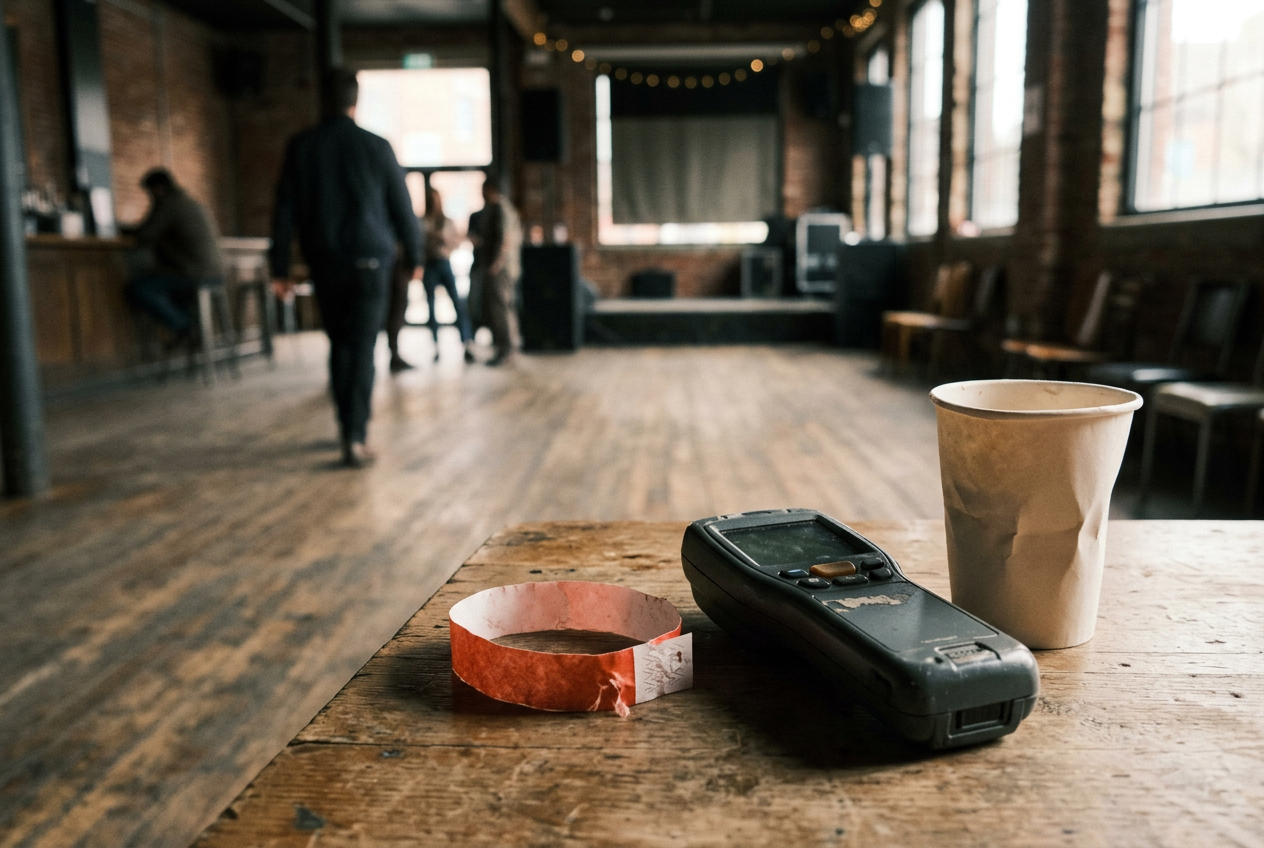
The useful object at a Daybreaker party is not the coffee cup. It is the admission band fastened around a wrist after the ticket scan.
That band says the room has already been paid for, at least in part, before the dancer reaches the floor. At a conventional club night, entry can be cheap because the venue expects to collect money repeatedly at the bar. At an alcohol-free event, the door must do more work. The wristband is no longer proof that you entered.
It is the principal receipt.
Daybreaker, founded by Radha Agrawal and Matthew Brimer in New York in 2013, made this arrangement legible by putting the party in the morning. Its early events at Coffee Shop in Union Square replaced the familiar late-night sequence of drinks, dance floor and regrettable cab ride with coffee, juice, DJs and exercise-adjacent programming. The press often treated the concept as an eccentric lifestyle swap. Morning rave, but make it wellness.
That description missed the machinery.
The morning was a venue deal.
The bar usually subsidizes the dance floor
Most independent promoters do not control the building, its liquor license or its point-of-sale system. They bring the crowd and book the talent. The venue supplies the room, bar staff, security, sound equipment and some portion of production, then keeps all or most drink revenue. The promoter may receive the door after agreed costs, a percentage of sales, or a settlement based on several negotiated thresholds.
A bar guarantee, meaning the minimum drink revenue a venue expects from an event, can determine whether the promoter gets the room cheaply or gets it at all. Alcohol has high margins, survives in storage and can be served quickly. A customer may buy several rounds without requiring another marketing campaign or ticket scan. That repetition is the hidden investor in a great deal of nightlife.
Remove alcohol and the landlord does not become charitable. The sound engineer still clocks in. Security still watches the entrance. Someone cleans the bathrooms after the last track.
Artists expect payment, while ticketing platforms and card processors take their cuts before the promoter discovers whether the night worked.
Nonalcoholic drinks rarely duplicate the old equation. Coffee takes labor. Fresh juice carries spoilage. Canned seltzer can be marked up, but dancers do not reliably buy it in repeated rounds at nightclub prices.
Zero-proof spirits, products formulated to imitate cocktail flavors without alcohol, can support a serious beverage menu; they cannot be assumed to produce the same volume or margin as liquor.
This is why many venues welcome an alcohol-free concept in a press release and become less lyrical when the contract appears.
Daybreaker sells time the venue was not using
Daybreaker’s sharp move was temporal. A nightclub, restaurant or event room sitting quiet in the early morning is an idle asset, which means its rent continues while its floor earns nothing. A promoter who fills that dead period can negotiate from a better position than one asking for Saturday at midnight.
The model does not eliminate venue costs. It changes the comparison. The owner is no longer weighing a sober crowd against a hard-drinking weekend crowd. The relevant alternative may be a locked door, an empty sound system and staff who were not scheduled anyway.
In New York, Los Angeles and other expensive cities, that shift matters more than the vague promise of a virtuous audience.
The wristband carries the rest. Daybreaker sells a bounded experience in advance, with a recognizable host identity and a format that can travel: early arrival, movement, DJ set, costumes, communal release, exit while the rest of the city is beginning work. Genre labels do little here. “Sober rave” is useful search language, but it conceals a ticketed event business built around repeat customers and a portable production template.
Advance sales improve planning because promoters can estimate attendance before hiring the final layer of staff or production. They also move the customer’s largest payment away from the room, where a thin nonalcoholic bar would expose the event’s weakness in real time. The dancer buys access first. Drinks become secondary.
That is a cleaner model than hoping kombucha saves the settlement.
The ticket absorbs what alcohol used to hide
A sober night often looks expensive at the door because the conventional club has trained customers to misread its own price. The cheaper ticket was never the whole charge. Drink purchases completed it later, unevenly and under lowered inhibition.
An alcohol-free promoter has fewer places to conceal the bill, so admission must cover artist fees, venue rent, ticketing charges, insurance, production and labor. The result can feel exclusionary, particularly when sobriety is marketed through polished wellness aesthetics to people already accustomed to boutique fitness prices. A dance floor can be safer from alcohol and still be economically narrow.
Tiered tickets, early-bird sales and lower-cost community allocations can spread access, but every discount shifts the burden somewhere else. Volunteers may reduce payroll, though a business that relies on unpaid enthusiasm has not solved labor costs. It has transferred them to the enthusiastic. Local DJs may accept smaller fees for a daytime set or an aligned crowd, but sobriety is not a reason to underpay talent.
Scale helps. A recurring organizer can reuse visual assets, production plans, ticketing infrastructure and mailing lists across cities. Customer acquisition, the cost of persuading someone to buy, falls when the organizer can contact previous attendees directly instead of purchasing attention from social platforms each time. Daybreaker has also extended its identity into branded collaborations, private programming and corporate wellness work documented in public coverage and its own materials.
Those adjacent jobs matter. Sponsorship and corporate bookings can subsidize public-facing events or fund the organization between them, although they introduce another customer with its own demands. A sponsor may like the photographs, the daylight and the language of healthy community. It may be less interested in paying for low-income tickets, welfare staff or a room where its logo stays discreet.
The party survives. Independence gets negotiated.
Harm reduction remains an expense
Alcohol-free and harm-reduction-oriented are related descriptions, not synonyms. A sober event prohibits intoxicants as part of its format. A harm-reduction event assumes some people may use drugs or alcohol and tries to reduce injury through water access, trained welfare teams, chill-out areas, drug-checking information where lawful, naloxone availability and clear routes to medical help.
Neither format makes duty of care disappear. A morning crowd can still experience dehydration, panic, medication complications or an ordinary medical emergency. Staff must know how to respond without treating distress as a disciplinary spectacle. Free water occupies space and adds servicing costs.
A quiet area reduces sellable capacity. Training takes time. These choices improve the room while producing little direct revenue.
Traditional nightlife often lets the bar finance those protections, when it funds them at all. A sober organizer must place them inside the ticket budget or find a partner willing to pay without turning care into a branded photo opportunity. Grants and public-health partnerships can support some harm-reduction work, but they tend to be restricted, temporary or administratively heavy. They are not dependable replacements for operating income.
This is the harder lesson behind the wristband. Sobriety changes who pays, not what a room costs.
The model works when sobriety shapes the contract
The weakest alcohol-free nights remove liquor after booking a room whose economics depend on liquor. They inherit a late-night rent, standard staffing assumptions and a venue expecting bar velocity, then attempt to patch the hole with premium mocktails. The flyer changed. The cost base did not.
A durable operator starts earlier. It books hours the building struggles to sell, chooses spaces without punishing bar guarantees, sizes production to advance sales and treats beverages as hospitality rather than rescue capital. It also builds a reason to return that exceeds abstinence. A room organized only around what is absent can feel like a support meeting with a subwoofer, which may serve some people well but cannot automatically sustain a touring dance brand.
Daybreaker’s reason is ritualized morning spectacle. Ecstatic dance communities, which generally prohibit alcohol and recreational drugs while centering loosely structured movement, often rely on community halls, studios and recurring local memberships instead. Other organizers use cafes, arts spaces and warehouses where the owner rents square footage rather than calculating lost cocktail sales. The aesthetics differ.
The economic principle holds.
Sober nightlife can survive without selling the bar when it stops asking the bar to underwrite the night. That means a more honest ticket, a less glamorous time slot and, often, revenue earned somewhere beyond the public dance floor. None of this guarantees affordability. It does make the operating model visible.
At the exit, the admission band is still around the wrist. No open tab waits to be closed. The room has to know whether that small strip paid enough.
Questions people ask
How do sober dance parties make money without alcohol?
Most depend on advance ticket sales, then reduce venue costs by booking mornings, early evenings or other underused hours. Recurring organizers may add sponsorship, memberships, private events or corporate programming, while nonalcoholic drinks provide supplementary revenue rather than carrying the event.
Why are alcohol-free club tickets sometimes expensive?
A conventional venue can discount admission because it expects customers to spend at the bar. Sober promoters must place more of the room rental, artist fees, security, sound, insurance and staffing costs into the ticket, making the real price visible at checkout.
Are sober parties automatically safer?
No. Removing alcohol reduces some risks, but organizers still need free water, trained staff, medical plans and a calm response to distress. Harm reduction costs money and labor even when a party prohibits intoxicants.
Can mocktails replace nightclub bar revenue?
Usually not by themselves. Nonalcoholic cocktails can carry healthy margins, but customers tend to order fewer rounds, while ingredients and preparation may cost more than pouring beer or standard mixed drinks. A sustainable sober night treats the beverage counter as one income stream, not the foundation.
One update a day
Today's story, in your inbox
One story each morning — no hype, no filler, no algorithm deciding for you.