Streaming Services Turned the Pause Button Into Ad Space
Prime Video can put a shopping prompt over a paused film. Other streamers sell the same idle moment more quietly. The viewer supplies the interruption; the platform keeps the inventory.
August 27, 2026 · 7 min read
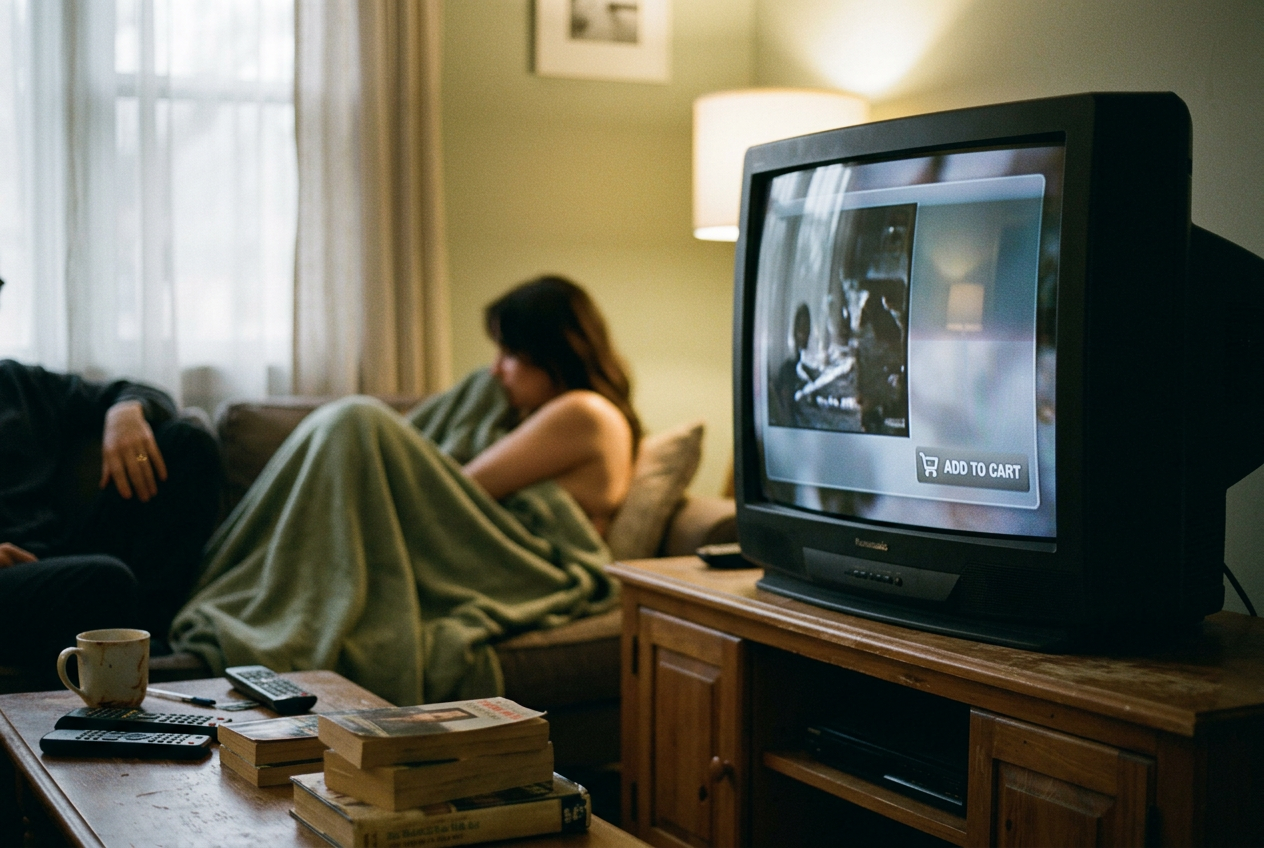
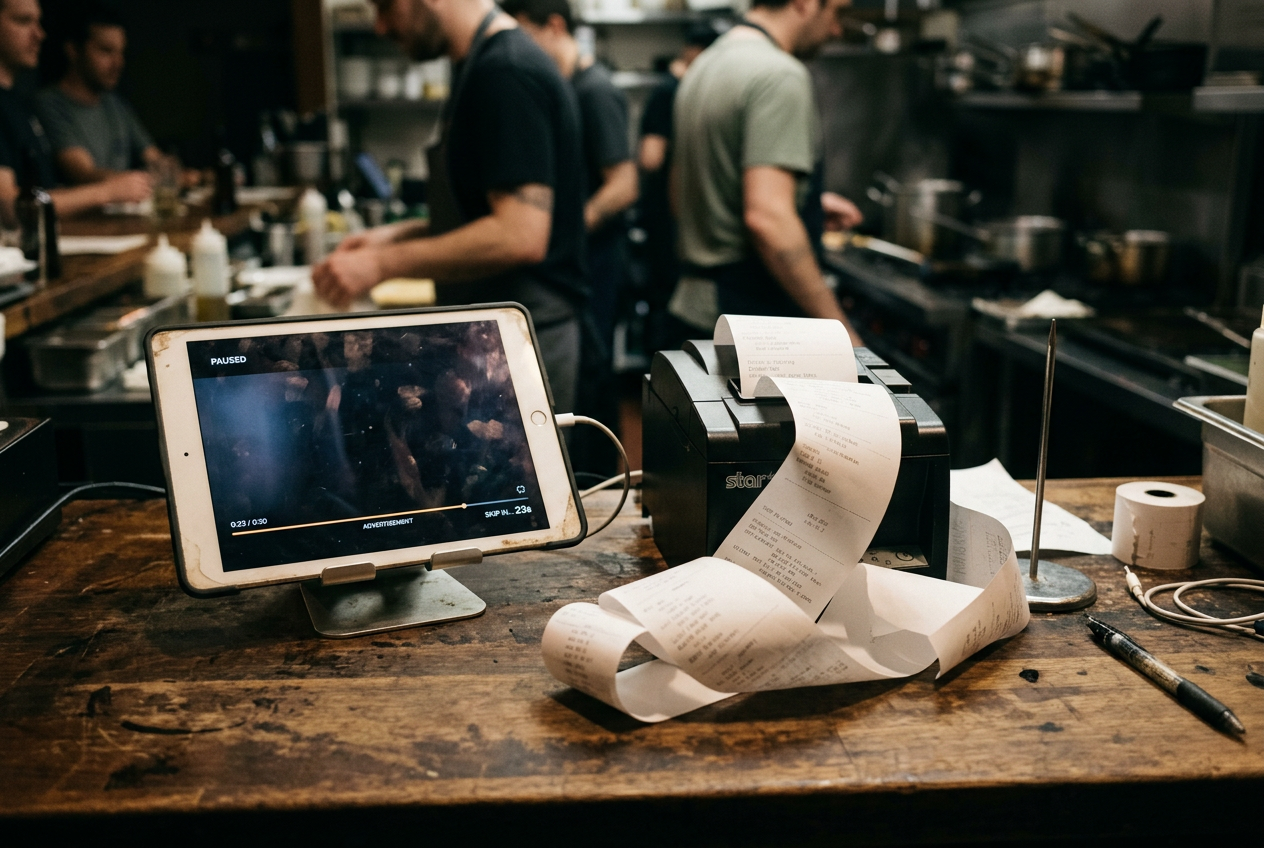
The button that gives the game away is on Prime Video. Pause eligible ad-supported programming and the image can darken beneath a translucent product ad, complete with a prompt such as “Add to Cart” or “Learn More.” The film remains visible enough to prove you have not left it. Everything around that image says you have entered a shop.
That small button changes the nature of the pause. A pause used to belong to the viewer: a stopped frame held while someone answered the door, read a subtitle again, inspected a costume, or returned with a glass of water. The service supplied playback controls and waited. Prime Video’s interactive pause ad treats the same interval as unsold space, then gives it a conversion button, meaning an action the platform can connect to an advertising goal.
The interruption is yours. The revenue opportunity is theirs.
The ad break that does not count as one
Traditional commercial breaks cost a streaming service something. They delay the program, irritate viewers, and make an ad-supported plan feel cheaper in the least flattering sense. Services therefore market limited ad loads, a measure of how much advertising runs during each hour of viewing, while trying to create more places to sell without stuffing another commercial into the episode.
Pause inventory solves that problem neatly. It does not interrupt active playback because playback has already stopped. It can sit for as long as the viewer remains away, and it reaches a television screen at the exact moment when the picture is static and competing motion has disappeared. The platform gains another saleable impression without adding thirty seconds to the program’s running time.
This distinction works for the seller, less so for the person who pressed pause. The screen has still been occupied by a message chosen and paid for by somebody else. Calling that message non-interruptive describes the accounting category, not the experience.
Prime Video pushes the mechanism furthest because its shopping prompts can shorten the distance between seeing a product and acting on it. A standard television ad has to hope you remember the brand later. An interactive pause ad can invite a remote-control click while the product is still on-screen, tying exposure and response more closely inside Amazon’s own commercial system. The paused movie becomes the background layer of a retail interface.
This is why the “Add to Cart” button matters. It reveals that the pause ad is not merely an old billboard squeezed into a new rectangle. It is part of a broader attempt to make television measurable and actionable like a web page, even though viewers chose the couch partly to escape the behavior demanded by one.
What the major services put over the image
The exact result varies by plan, device, title, region, and active campaign. That variability is useful to the platforms. A viewer cannot easily know whether the next pause will produce controls, metadata, a house promotion, or a paid ad, while the service can switch formats without changing the program itself.
Prime Video offers the clearest commercial version. On eligible ad-supported viewing, its interactive pause format can place a translucent display ad over the stopped picture and attach shopping or information controls. Amazon also controls the player, the advertising relationship, and a large retail system, so the remote button can do more than register vague interest. It can move the viewer toward a product page without surrendering the interaction to another company.
Hulu helped establish pause advertising as a living-room format. Its version generally replaces the empty stillness of a paused program with static branded creative after the viewer has stopped playback, using a format designed to be readable without sound or video. That restraint is strategic. Motion would make the ad feel like playback had resumed without permission; a static panel lets the platform claim it has respected the pause while still selling the screen.
Disney has extended pause advertising across its streaming portfolio, including Disney+ advertising inventory. The corporate logic is scale: one sales operation can offer brands access to several services and audience types, while the viewer encounters the format as a local interface decision. The paused animation, sitcom, or franchise film becomes another placement in a larger advertising package.
Peacock sells the same basic event. A branded pause unit occupies the idle screen while content remains stopped, turning NBCUniversal’s player into inventory between scheduled commercial pods. Max and Paramount+ have also offered pause formats within their advertising businesses. Their designs and eligibility can differ, but the bargain is consistent: the service waits for the viewer to create a quiet moment, then fills it.
Netflix requires more caution because its advertising products, supported devices, and available formats continue to change. On an ad-supported plan, the important point is no longer whether a service runs commercials only before or during a title. Once the player supports additional display formats, every inactive state can become a candidate for monetization, subject to whatever campaign is live.
Apple TV+ remains the useful contrast while it lacks a conventional third-party ad-supported subscription tier. Pausing its subscription programming generally leaves playback controls and title information rather than a paid consumer ad. The wider Apple TV app is also a storefront and recommendation surface, so it is hardly free from promotion, but a control overlay is still meaningfully different from selling the stopped frame to a detergent or car brand.
None of these interfaces stays fixed. Apps update remotely, campaign delivery changes, and streaming sticks may receive features on different schedules. A single clean pause proves only what happened on that plan and device at that moment. The instability is part of the product: advertising can expand through software without a new television, a new subscription, or a fresh consent screen that anyone remembers seeing.
A neutral screen had value
The paused frame was never entirely pure. DVD players added icons. Cable boxes displayed controls. Streaming apps layered titles, episode descriptions, progress bars, and cast information over the image.
Some dimmed the picture to protect screens or launched a screensaver after a period of inactivity.
Those overlays helped operate the thing the viewer had already chosen. Paid pause creative introduces another party with another objective. The advertiser wants attention, the platform wants revenue and response data, and the viewer wants the program to remain where it was. Only one of those objectives caused the button to be pressed.
This matters beyond annoyance. Pausing can be part of watching closely. Viewers stop films to read text, study production design, identify an actor, or hold a composition that passed too quickly. A large advertising panel degrades that use even when the underlying image remains faintly visible.
It converts a playback function into a temporary takeover, with the film demoted to proof of context.
Return to Prime Video’s “Add to Cart” prompt. The stopped frame still sits underneath, but its role has changed. It is no longer the object being examined. It is visual collateral for the interface above it.
The viewer supplies the scarce moment
Streaming companies have a finite amount of programming time they can interrupt before customers downgrade their opinion of the service or leave. They have far more interface time: home screens, loading screens, menus, credits, screensavers, and pauses. The industry’s next advertising expansion does not require longer commercial breaks if it can monetize the states surrounding the show.
Pause ads are particularly attractive because the viewer generates the trigger and the likely dwell time. The service does not have to guess where to insert the unit into a scene or negotiate a natural break with a producer. It waits for the remote command, confirms playback has stopped, and serves eligible creative into the overlay. The viewer performs the scheduling labor for free.
The ad can also be measured like other connected-TV inventory. Connected TV means television delivered through an internet-linked device, which lets the platform record whether an ad loaded, whether someone clicked a prompt, and what happened next within the limits of its systems and policies. Shopping controls make that record more valuable because they offer a direct action rather than an inferred memory.
An honest alternative is not complicated. Ad-supported services could reserve pause inventory for controls and the undisturbed frame, treating the function as part of playback rather than a commercial surface. They could offer a visible setting that disables pause ads, or confine them to a side panel that never covers the image. Ad-free plans should exclude paid pause creative without quietly redefining house promotions as something else.
Those options cost inventory. That is why they are unlikely to arrive through interface taste alone.
The paused frame lasted because nobody had assigned it a sales target. Now they have. The “Add to Cart” button is waiting where the glass of water used to be.
Questions people ask
Why are streaming services putting ads on pause screens?
Pause ads create additional inventory without extending a scheduled commercial break. The viewer has already stopped playback, giving the service a static, high-attention screen that can hold an ad until viewing resumes, while allowing the company to describe the format as less interruptive than video commercials.
Do pause ads appear on every streaming plan?
No. Placement depends on the service, subscription tier, device, region, title, software version, and whether an eligible campaign is running. An ad-free plan should be less likely to show paid creative, though services may still display their own recommendations, upgrades, or programming promotions.
Can a pause ad cover the movie or show?
Yes, though the treatment varies. Some formats dim the paused image beneath a translucent panel, while others rearrange the frame around static branded creative. Even when part of the picture remains visible, the ad can prevent viewers from using pause to inspect subtitles, compositions, costumes, or background details.
Who benefits from interactive pause ads?
The streaming service gains another placement to sell, and the advertiser gets an attentive screen with a possible click. On Prime Video, shopping prompts can also connect the ad to Amazon’s retail system. The viewer receives no comparable benefit beyond avoiding another commercial inserted into active playback.
One update a day
Today's story, in your inbox
One story each morning — no hype, no filler, no algorithm deciding for you.