That Ticket Link Makes the Band Carry the Venue’s Risk
Tracked links and presale quotas turn a half-empty room from the promoter’s problem into the artist’s failure, while the hours spent filling it remain unpaid.
September 6, 2026 · 8 min read
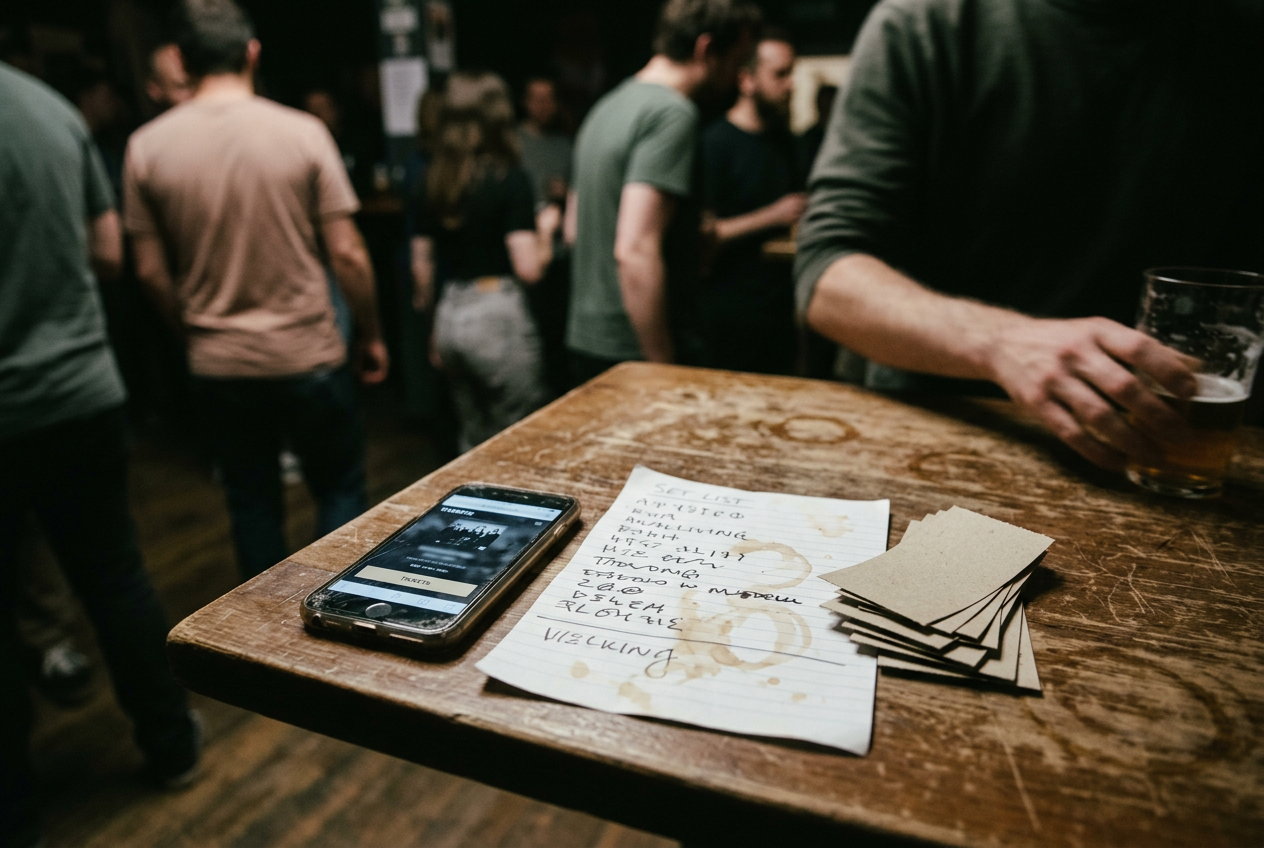
The object to watch is an artist-specific ticket link. It looks harmless enough in an Instagram bio: the venue logo, the date, the lineup, a blue button asking for money. Behind that button sits a source label in the organizer’s ticketing dashboard, recording which purchases came through the band’s URL.
Eventbrite and Ticket Tailor publicly document versions of this tracking technology. Organizers can create distinct links for marketing channels, affiliates or participants, then compare the sales attributed to each one. There is nothing inherently predatory about that. A bakery can track whether its newsletter sells more classes than its Instagram account.
A venue can learn whether a local radio spot moved tickets.
The power changes when the tracked participant is a musician whose place on the bill depends on the result.
Then the link stops being analytics and starts behaving like an invoice that has not been totaled yet. The band posts it, messages friends, makes vertical videos, writes mailing-list copy and watches the count. If sales lag, the promoter has a number to point at. The room’s failure can be assigned to one name on the poster.
The paper allocation never disappeared
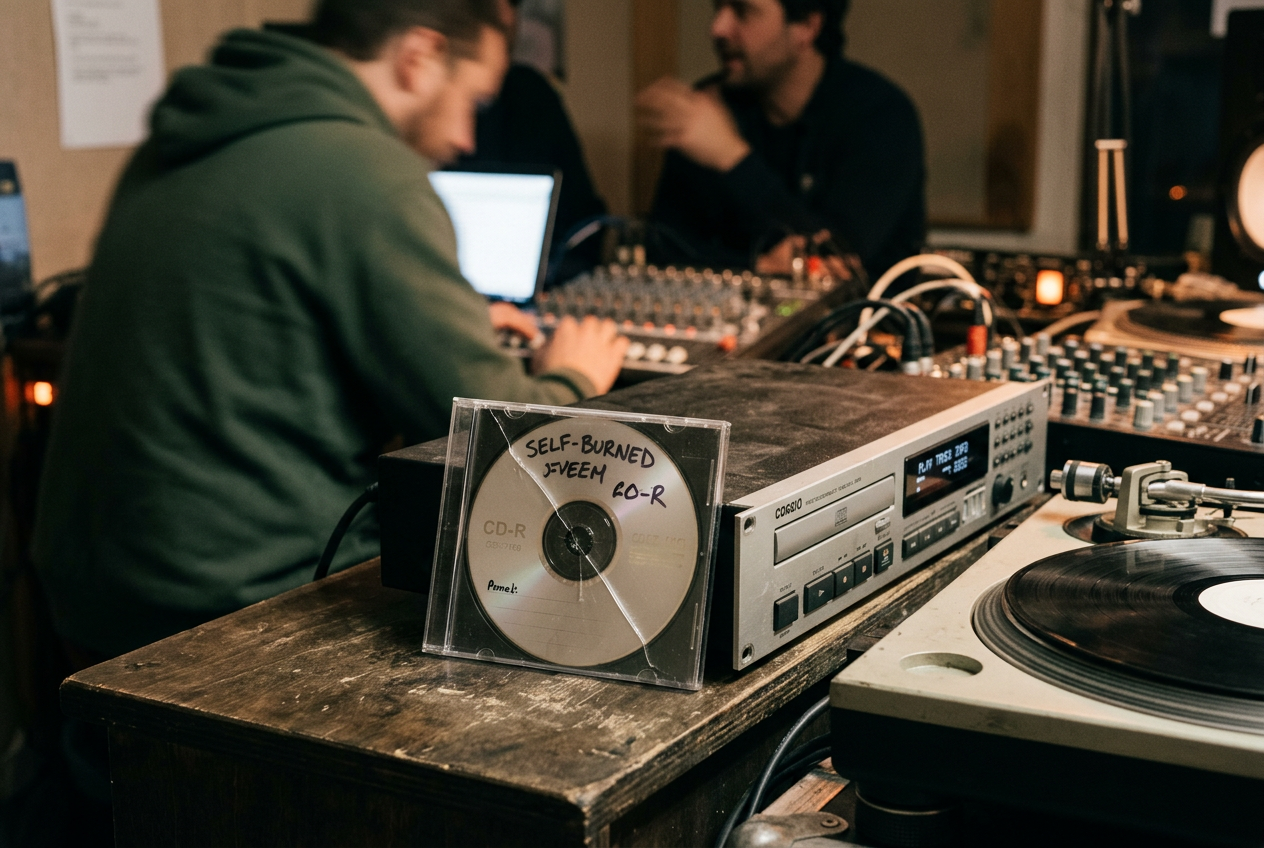
The Musicians’ Union has long warned artists about pay-to-play arrangements, including deals where a promoter hands a band an allocation of tickets and requires the act to sell them, buy them upfront or cover some portion left unsold. The stack of paper tickets was crude, but its logic was clear. The musician became a reseller before becoming a performer.
The modern link keeps that logic while removing the embarrassing physical evidence. There is no wad of unsold tickets on a rehearsal-room table. There is a clean dashboard and a reminder email. The promoter can describe the quota as a presale target, a marketing expectation or proof of draw, which means the number sounds less like a charge and more like a test of professional seriousness.
Sometimes no explicit penalty appears. The sanction arrives later. The act receives a worse slot, is dropped from future bills or gets told that its audience did not convert. A support opportunity that looked like artistic programming becomes conditional retail work.
This distinction matters because ordinary show promotion is part of playing live. Musicians announce dates. They put posters in record shops, send mailing lists and ask people to come out on a wet Thursday. The exploitative turn happens when the promoter makes access to the stage contingent on a sales obligation while retaining control of the ticket price, room, schedule and customer relationship.
The artist supplies the audience. The venue owns the transaction.
The deal underneath the poster
A small show can be financed several ways. Under a guarantee, the artist receives an agreed fee regardless of ticket sales, although contracts may still contain cancellation terms. Under a door split, the performer receives a stated share of eligible ticket revenue after whatever deductions the deal permits. A venue-hire arrangement puts more responsibility on the artist or outside promoter, who rents the room and keeps the relevant income after costs.
Presale quotas blur those models. The venue behaves as though it booked an outside promoter when it needs customers, but treats the artist like hired entertainment when setting the schedule, bar policy and production conditions. That ambiguity works for the party writing the offer.
Consider what happens when the room does not fill. Rent, staffing, security and technical costs still exist. The bar has fewer bodies to sell to. A promoter taking genuine entrepreneurial risk absorbs the shortfall because that is the job: choose the bill, price it, advertise it and live with the result.
A quota moves part of that uncertainty downstream before the doors open.
The tracked link makes the transfer legible. If an act is expected to account for a block of admissions, the promoter can treat those sales as a miniature revenue guarantee without calling them one. When the band succeeds, the venue receives ticket income and a room of potential drink buyers. When the band fails, the promoter gains a reason to reduce pay or future access, even if the lineup was mismatched, the ticket price was wrong or the venue barely marketed the show.
This is why the arrangement survives. It does not need every artist to hit the target. It needs enough artists to mobilize overlapping networks of friends, relatives and existing fans so that the promoter can assemble a crowd without paying for the labor of assembling one.
Attribution is not the same as demand
Ticket dashboards look precise. Their meaning is much messier.
A purchase credited to the band’s link does not prove the band created that purchase. A fan may already know the venue, prefer the headliner or have seen the full bill elsewhere before using whichever URL appeared last in a group chat. The software records the route into checkout. It cannot settle the cultural reason someone decided to go.
That gap is useful to promoters. Sales attached to the support act’s link can be presented as evidence that tracking works, while sales through the venue’s main page become part of the general house total. The artist’s contribution is counted narrowly when leverage is being assessed and broadly when the room advertises its success.
The customer data usually follows the ticketing account, too. The musician may receive a sales count without gaining the attendee emails, purchasing history or permission records that would help build a durable audience. The venue keeps the relationship with the buyer. The artist gets another screenshot to refresh.
At load-out, the asymmetry remains. The band has performed, promoted and supplied measurable customers. Unless the deal includes a guarantee, commission or meaningful split, the tracked link has documented value without requiring anyone to pay for the work that produced it.
Why small rooms reach for quotas
Grassroots venues are under real pressure. Music Venue Trust’s reporting and UK parliamentary work on grassroots music have described rooms squeezed by operating costs, property pressures and fragile margins. Similar complaints recur across independent venues in Los Angeles, New York, Chicago and smaller touring markets, where a bad night cannot be spread across an arena calendar.
That explains the incentive. It does not cleanse the method.
A venue with little cash can reduce marketing spend by recruiting every act as a separate street team. A promoter with weak confidence in a lineup can demand presales instead of improving the booking. The quota also screens for musicians with active social networks, which may look efficient on a spreadsheet but rewards access to disposable income, large friendship groups and audiences willing to buy out of personal loyalty.
The result selects for sales capacity rather than performance quality. An established local act can still be trapped by it, especially when support slots are scarce, but newer musicians carry the sharper burden. They have fewer fans, less bargaining power and more reason to fear that refusing the link will mark them as difficult.
Genre language often helps disguise the sorting. A promoter may advertise an “indie showcase,” an “emerging artist night” or another category broad enough to place unrelated acts together, then expect each one to deliver its own pocket of customers. The room does not need a coherent scene if four bands can each bring acquaintances who leave after their friend’s set.
That is audience rental. It produces turnover, not community.
A fair link needs a fair deal
Tracked sales can support a defensible arrangement when everyone knows what the count controls. An artist might receive a commission for tickets sold through its URL, a higher share after an agreed threshold or access to privacy-compliant buyer information. The promoter can state its own advertising commitment and explain which expenses come out before a split is calculated.
Crucially, unsold inventory should remain with whoever controls the room and presents the event unless the artist has knowingly taken on the promoter role. Calling a musician a co-promoter does not create equality when the venue controls checkout, production and settlement.
There is also a simpler model. Book fewer acts. Build a bill whose audiences might stay for one another. Pay a modest guarantee where possible, then add a transparent share of the door.
Market the night as a night, rather than outsourcing four separate campaigns to people who already spent their week rehearsing and traveling.
The artist-specific link will still be sitting in the bio. It can count purchases. What it should not do is quietly decide who deserves to be paid for making the room worth entering.
Questions people ask
What is a presale quota for a gig?
A presale quota is a ticket-sales target assigned to an artist before the show. It becomes pay-to-play when missing that target can cost the artist money, reduce payment or threaten access to the bill, especially when the venue controls pricing and keeps most of the ticket relationship.
Are artists always expected to promote their own shows?
Artists commonly announce dates and encourage fans to attend. The problem begins when promotion becomes a compulsory, unpaid sales assignment tied to stage access or compensation, while the promoter avoids responsibility for advertising the full event and building an audience beyond each band’s personal network.
Who carries the risk when a venue uses ticket quotas?
The artist carries more of it. The venue still faces fixed operating costs, but a quota gives it advance revenue, free marketing labor or grounds to penalize a weak seller. The musician risks unpaid preparation, travel and performance time, plus the social cost of repeatedly asking the same people to buy tickets.
Do tracked ticket links prove which artist drew the crowd?
They prove which link completed an attributed sale, within the ticketing platform’s tracking rules. They do not prove why the buyer attended, whether another act created the interest or whether the customer would have purchased through the venue page anyway. The number is useful, but promoters often ask it to carry more certainty than it contains.
One update a day
Today's story, in your inbox
One story each morning — no hype, no filler, no algorithm deciding for you.