Your Campus Alert App Can Keep Location Access After the Crisis
New Jersey safety apps bundle useful alerts with tracking tools whose permissions do not expire. The emergency ends. The channel into your phone can remain.
August 28, 2026 · 8 min read
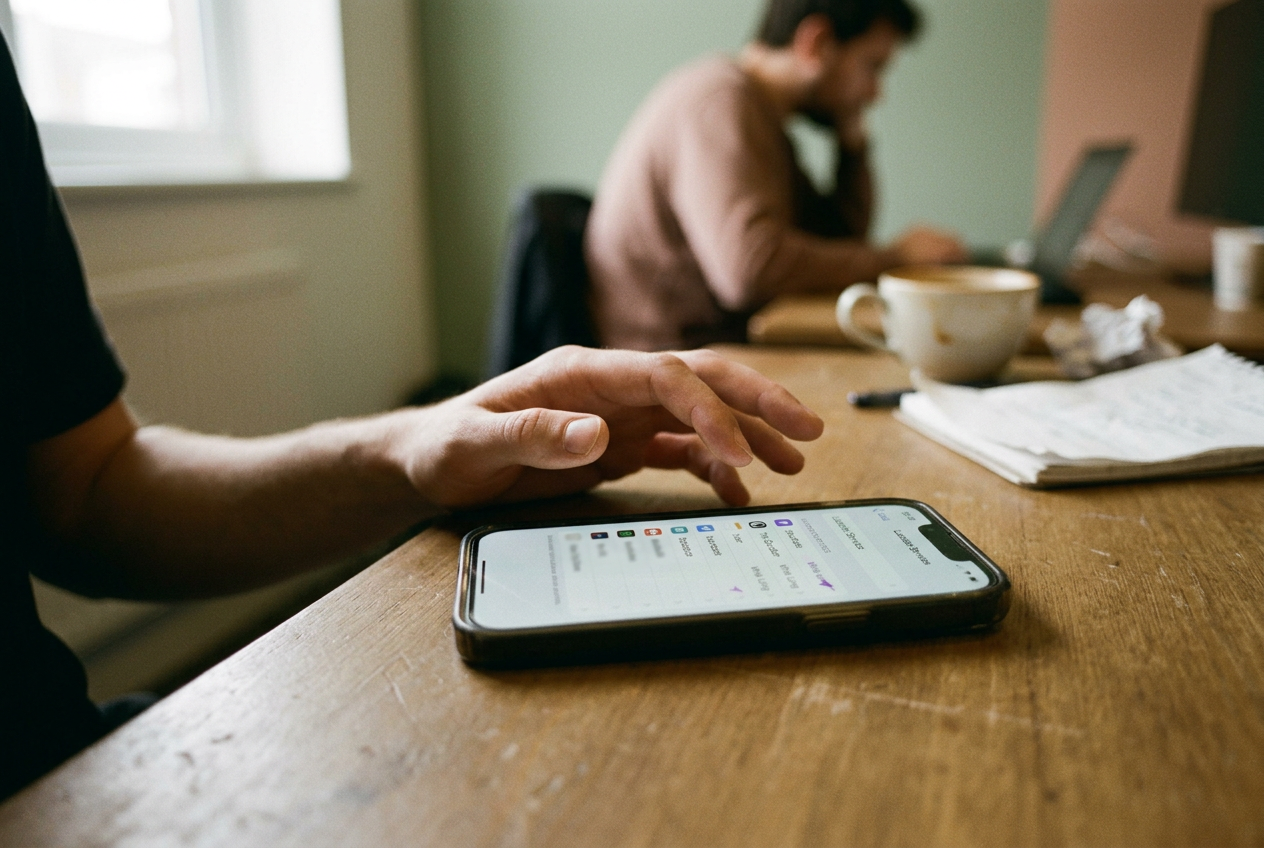
The revealing object in this audit was a small purple arrow beside Guardian in the iPhone’s Location Services menu. Rave Guardian is promoted by Rutgers as a campus safety app, with emergency calling, tip submission and a safety timer alongside institutional alerts. On the test phone, the useful part arrived first: notifications about conditions on campus. The durable permission sat elsewhere.
That arrow meant the app had recently accessed location. The setting beside it allowed access beyond the moments when Guardian was open. Nothing on the phone said the permission would expire after an emergency, a semester or graduation. Mobile operating systems may occasionally remind users that an app has background access, but the basic bargain has no closing date.
This is the mechanism hiding under the public-safety pitch. Institutions encourage installation during the precise moment when a student or resident is least inclined to negotiate with a permission screen, while vendors sell a package that combines one-way alerts with features that need much more access. The alert and the tracking tool share an icon. Their technical requirements do not.
The permission that survives the emergency
A push notification, meaning a message delivered through Apple’s or Google’s notification service, does not need continuous GPS access. An institution can send a closure warning or shelter instruction to a device that has denied location entirely. Location becomes relevant when the app offers geographically targeted warnings, a mobile panic button, route monitoring or a timer meant to help responders find someone who fails to check in.
Those features can be legitimate. A person walking across an empty campus may want a safety timer that keeps working after the screen locks. Emergency dispatchers may need a caller’s position while the caller moves. Background location, which lets an app receive location data when it is not visibly in use, supports that job.
The permission still carries farther than the moment. In the Guardian test, denying location did not stop ordinary campus alerts. It reduced the utility of location-dependent emergency tools, as expected, but the app remained an alert app. That distinction was clearer in the phone’s settings than in the institutional invitation to download it.
Return to the purple arrow a week later and it has no memory of why the permission was granted. Apple and Android manage access by app, not by campus incident or feature session. Unless the developer builds its own expiration control, permission granted for a safety walk can remain available during breakfast, a weekend away and the months after the user has stopped opening the app.
That works for the vendor. A broad permission keeps every contracted feature ready without forcing a frightened user through another prompt, while the university avoids explaining why its emergency button cannot locate somebody who declined access. Convenience has an institutional constituency. Data minimization rarely gets a banner campaign.
The New Jersey safety-app stack
Rave Guardian is the clearest campus example because it puts several different jobs under one badge. Rutgers promotes it for alerts and interactive safety features. Rave Mobile Safety is part of Motorola Solutions, so the app also sits inside a large public-safety vendor relationship rather than a stand-alone student utility. The institution buys operational coverage.
The user supplies the phone.
Princeton’s TigerSafe follows the same bundle logic through AppArmor’s campus-safety platform. Its public-facing functions include emergency contact tools, safety resources and location-dependent services such as a virtual walk. During setup and use, the meaningful permission question is attached to the feature being activated, yet the operating system records the resulting access against TigerSafe as a whole. A student remembers trying a walk feature.
The settings panel remembers an app permission.
Municipal systems widen the pattern. New Jersey local governments commonly route residents toward Everbridge or its Nixle-branded notification channels for weather, traffic and police messages. Subscribing by text or entering a home area can deliver relevant notices without granting an app live location. The Everbridge app can also use device location for nearby incidents and travel-related warnings, which turns a fixed subscription into a moving one.
That may sound like a small upgrade. It changes the data relationship. A town needs an address or selected ZIP code to warn residents about a water problem. A service following the phone can infer presence somewhere else, subject to the app’s settings and the operating system controls.
The first model asks where to send alerts. The second can ask where the device is.
Smart911 presents a different risk. Its value comes largely from information a user enters into an emergency profile, which may include household and medical details intended for dispatchers. This is not primarily a silent GPS problem. It is a persistence problem: highly sensitive information can remain in an account after the motivating event has passed, and users must remember that a profile created during one anxious afternoon still exists.
Across the four products, the permissions differed by platform, configuration and feature. The pattern did not. Basic warnings required less access than the full safety package encouraged, and the least invasive route was usually available through notification subscriptions, text messages or a selected address. Institutions rarely lead with that separation because procurement favors adoption of the platform they already bought.
A privacy policy is not a deletion timer
Permission and retention are separate controls. Revoking location stops future access through that permission, but it does not automatically erase data already received by the vendor, logged by the institution or included in an emergency record. Deleting the app does even less than people assume. It removes software from the phone.
It does not necessarily delete the associated account.
The policies reviewed for Rave Guardian, AppArmor, Everbridge and Smart911 describe data collection in relation to requested features, service operation, customer instructions, security and legal duties. That is normal corporate drafting. It is also elastic. Retention language framed around necessity, contractual obligations or legal requirements does not give a student a date when a location-linked event disappears.
The institutional customer complicates the chain. A vendor may process information for a university or municipality, while the public agency may separately retain an alert registration, submitted tip or incident record under its own schedule. A privacy policy can therefore explain what the company does without telling a user what every recipient keeps. Public records law and emergency-response obligations may also preserve certain records, depending on what the user submitted and how officials used it.
App-store privacy labels do not close the gap. Those labels are developer-supplied summaries of data practices, useful for comparison but too compressed to function as an audit. The Android permissions panel and Apple’s Privacy Report can show what an installed app has recently contacted or accessed; neither supplies a plain deletion date for records held elsewhere.
That purple Guardian arrow was concrete. Retention was mostly contractual language distributed among a vendor, an institution and the user account. The visible permission looked like the whole issue because phones are good at presenting switches. The harder question lives off-device.
Keep the alert, narrow the channel
The practical audit takes less time than reinstalling every emergency app before a storm. Open the phone’s privacy settings, find Location Services or the Android permission manager, and inspect each campus or municipal app. If it only delivers alerts tied to a school, town or chosen address, location can usually be set to Never or denied. Notifications remain a separate permission.
If a safety timer or mobile emergency button matters, choose access while using the app where the feature supports it. Background access should match an active need, not the possibility that the feature might someday be useful. Precise location, which exposes a finer position than an approximate area, deserves the same test.
Then open the account page. Look for saved addresses, emergency profiles and deletion controls. Removing an unused profile is more meaningful than deleting the icon alone. A user who submitted an incident or requested assistance should not assume account deletion will erase the official response record.
Institutions could make this easier. Their installation pages could separate alert-only setup from interactive tracking, publish feature-level permission tables and state the retention period for each category of user data. Vendors could expire background location after a safety session and ask again next time. None of that would weaken emergency messaging.
It would weaken the habit of treating crisis consent as renewable forever.
The phone used for this audit still received Rutgers notifications after Guardian’s location access was switched off. The purple arrow disappeared. The alert channel stayed.
Questions people ask
Does an emergency alert app need my location?
Usually not for general campus or municipal notifications. Location may be needed for nearby-incident alerts, moving safety timers or emergency features intended to help responders find the phone, but messages tied to a selected school, town or address can generally arrive without continuous GPS access.
Does deleting a safety app erase its data?
Not necessarily. Deleting the app removes its local software and permissions, while account records, submitted tips, emergency profiles or response logs may remain with the vendor or institution under separate retention rules. Use the service’s account-deletion control and read any notice explaining what cannot be removed.
Can
I keep notifications while turning off location?
Yes. Apple and Android manage notification and location permissions separately. In the apps evaluated, ordinary alerts could still arrive after location was denied, though geographically targeted warnings and interactive emergency tools could lose functionality or require location when activated.
Who controls data from a campus safety app?
Control may be divided among the vendor, the university or municipality, and emergency agencies that receive a report. The vendor’s privacy policy covers only part of that chain, so users should also check the institution’s privacy and records language, particularly after submitting a tip or requesting assistance.
One update a day
Today's story, in your inbox
One story each morning — no hype, no filler, no algorithm deciding for you.