New Jersey’s Rehearsal Rooms Are Becoming Venues by the Hour
Hourly studios can host the performances formal venues have priced out. The model works by sharing infrastructure, limiting the crowd and staying inside rules written for another kind of room.
August 25, 2026 · 8 min read
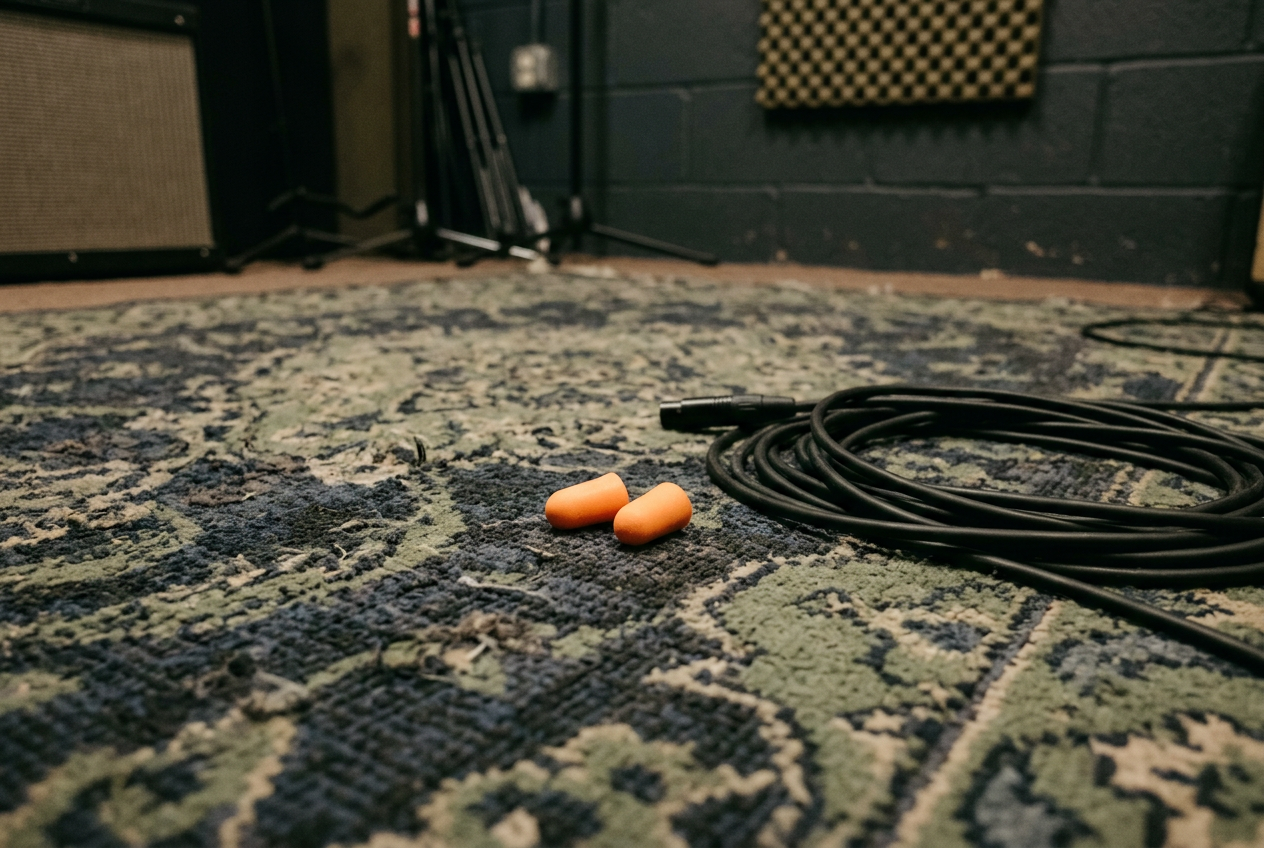
Start with the orange foam earplug. Polyurethane, disposable, rolled narrow between two fingers and held in the ear canal while it expands. It is the cheapest useful object in a rehearsal room, and the one that tells you what the room was built to do: contain amplified sound long enough for musicians to work, without requiring the social machinery of a club.
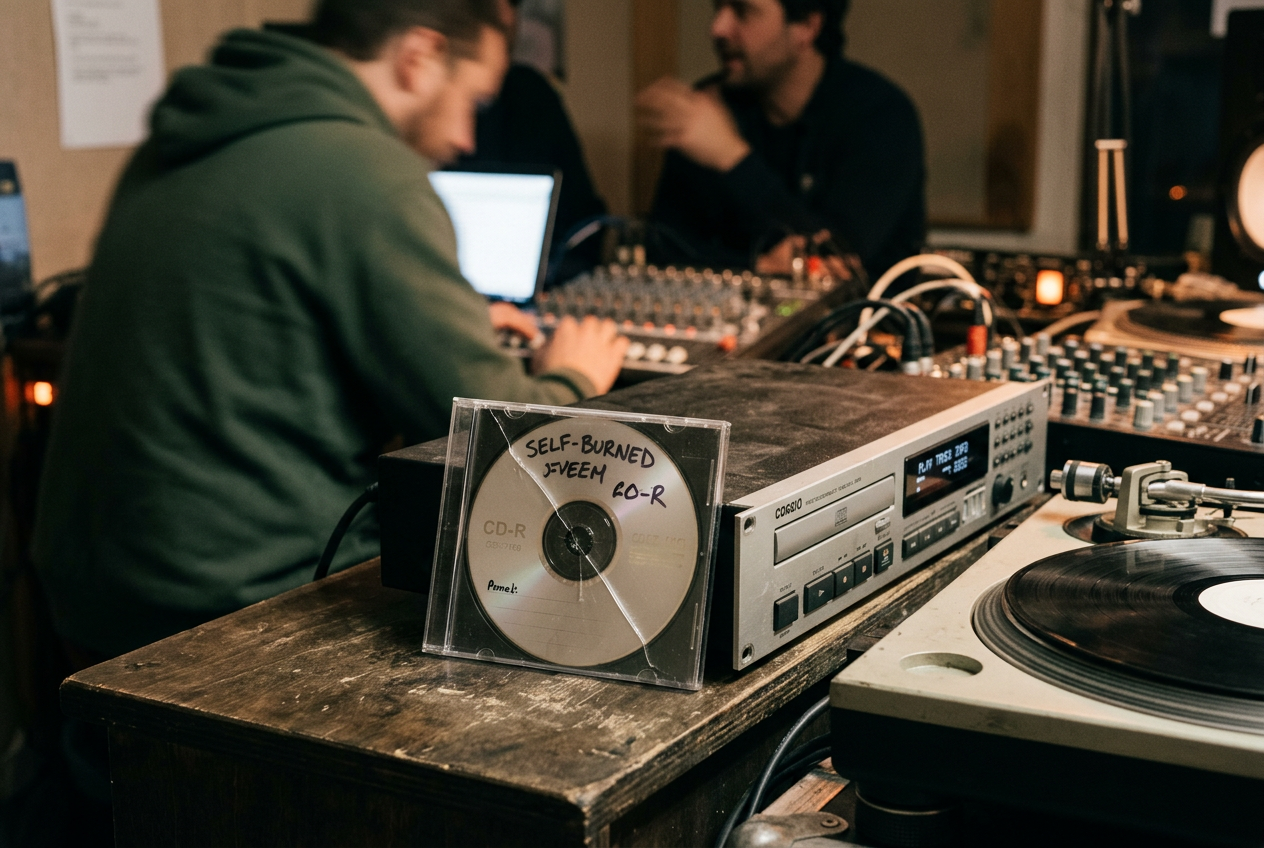
That machinery has become expensive. A formal venue needs staff, scheduled access, public-facing security, code-compliant audience circulation and enough revenue from tickets, drinks or rentals to justify opening the doors. A rehearsal studio already has much of the physical kit: power, acoustic treatment, microphones, stands, a drum setup in some rooms, bathrooms and neighbors who did not move next to the building for silence. Rent it by the hour, invite a controlled crowd and the practice room starts behaving like a venue.
Across New Jersey, businesses publicly advertising rehearsal, recording and event functions make the overlap visible. Factory Records in Dover is a particularly legible case. Its public materials place rehearsal studios, recording services and event space inside the same music complex. The important detail is not branding.
It is adjacency. A room paid for by recurring practice bookings can support a showcase or listening session without asking one night’s ticket sales to carry the whole building.
That is the hidden subsidy. The band rehearsing on Tuesday helps keep the lights on for the performance on Saturday.
The venue is a scheduling category
A rehearsal room does not become affordable by discovering cheaper speakers. It becomes affordable because its fixed costs are spread across more hours and more kinds of use. Bands pay for contained blocks of time. Producers book sessions.
Teachers can use quieter periods. A small performance occupies another slot in the calendar, often with the artist handling invitations, promotion and door management.
Formal rooms price in uncertainty. They need a guarantee, a rental fee, a cut of ticket sales or enough bar business to cover workers and overhead. The performer pays for access to an institution before anyone plays a note. Hourly studios reverse that arrangement: buy a block, keep the audience narrow and leave before the next booking.
The cost follows time rather than projected drinking.
That works especially well for music that does not yet have a dependable draw. A first showcase, a rapper’s listening session or an invite-only set may have cultural value without having enough ticket buyers to satisfy a conventional promoter. An hourly room lets the artist purchase privacy and sound instead of pretending to be a viable bar attraction. There is less prestige.
Prestige is not acoustic treatment.
The distinction also changes who controls the night. A venue calendar is a gatekeeping instrument, even when the booker has excellent taste. A rehearsal calendar mostly asks whether the room is available and whether the booking fits the operator’s rules. That lower threshold can admit unfinished work, genre collisions and artists whose audience exists in group chats rather than a promoter’s spreadsheet.
The orange earplug returns here. In a club, hearing protection is an accessory to the programmed experience. In a rehearsal room, it belongs to the room’s original function. The performance is borrowing an environment designed for sustained volume, which is why it can feel more direct than a showcase with a branded backdrop and six minutes of changeover theater.
The cheap part has boundaries
The workaround is often described as DIY ingenuity, which is flattering and incomplete. It functions through four documents most people in the room never see: the lease, certificate of occupancy, insurance policy and local noise ordinance.
A commercial lease controls permitted use, meaning the activities the landlord has agreed can happen on the property. “Music rehearsal” does not automatically mean “public performance.” A landlord may restrict events, admission charges, late operating hours, alcohol, subletting or any use that increases foot traffic. An invite list does not erase those clauses.
Calling a concert a session may soften the flyer, but the building still receives a crowd.
Occupancy rules are equally indifferent to aesthetics. A certificate of occupancy records how a space may legally be used, while an occupant load sets how many people can be present based on floor area, exits and the room’s configuration. New Jersey’s construction and fire codes distinguish ordinary working spaces from assembly uses, where groups gather for entertainment. Moving chairs, blocking a corridor with gear or packing listeners around a live setup can change the practical risk even when nobody sells a ticket.
Insurance follows the declared activity. Commercial general liability coverage protects a business against certain claims involving injury or property damage, but policies are priced and written around the operations the insurer knows about. Regular rehearsals and audience events do not necessarily present the same exposure. Door staff, performers, cables, crowded exits and alcohol each complicate the picture.
If an event falls outside the described use, the operator may discover the limit of the workaround after somebody gets hurt.
This is where affordability can become risk transfer. The artist gets a cheap room because the operator, landlord or neighboring tenant carries costs that a licensed venue would put into the rental price. Sometimes the room has approval for mixed use and the event is ordinary business. Sometimes everyone is relying on scale, discretion and the hope that no inspector, insurer or angry neighbor examines the nouns on the booking form.
That distinction matters. Underground culture has always used rooms creatively. It does not follow that artists should be grateful for unsafe exits or ambiguous coverage. Cheap access built on a bounded crowd and a compliant space is infrastructure.
Cheap access built on one overworked operator absorbing unlimited liability is a countdown.
Noise decides whether the room can stay social
Soundproofing is the common shorthand, though most rehearsal rooms depend on sound isolation, which reduces transmission into adjoining spaces, rather than making sound disappear. Dense walls help. Sealed doors help. The weak points are often ventilation, shared structure and the moment somebody props open an exterior door because the room is hot.
New Jersey regulates noise through state standards and local enforcement, with municipalities playing a central role in complaints and ordinances. What matters outside the room is not whether the performance was invite-only. It is the level, duration, hour and location of the sound received by somebody else. Bass is particularly troublesome because low frequencies travel through walls and building frames that appear to contain vocals and cymbals.
Rehearsal businesses can manage this when musicians arrive in small groups, close the door and play during established hours. A performance changes the pressure on the envelope. People enter and leave repeatedly. Conversation gathers outside.
Cars idle. The room heats up. Every opening of the door releases sound, and the audience creates a second noise source that acoustic panels cannot absorb from the sidewalk.
The earplug can reduce what reaches a listener’s inner ear. It does nothing for the apartment across a property line.
A sustainable operator therefore has to curate logistics as aggressively as music: firm end times, capped attendance, clear loading rules and no lingering outside. Those restrictions can feel hostile to nightlife because nightlife depends on the unplanned hour after the set. They are also what keep a small performance from turning into the complaint that ends every future booking.
Formalization eats the discount
The successful rehearsal venue faces a trap. More events can justify better staffing and equipment, but regular public programming also makes it harder to claim that performances are incidental. The business may need approvals, policy changes, security practices and building work appropriate to an event space. Each improvement is defensible.
Together they recreate the cost structure artists fled.
That does not mean the model is fake. It means its advantage has a scale. Rehearsal rooms are strongest as small cultural rooms, not undercapitalized clubs waiting to grow up. Their value lies in low-frequency, controlled performances supported by the ordinary income of practice bookings.
Push the audience larger, add a bar and program every weekend, and the hourly studio starts inheriting the obligations of a venue without gaining a venue’s margins.
Public policy usually recognizes nightlife only after it becomes legible as hospitality, entertainment or redevelopment. Rehearsal spaces occupy a less glamorous category, closer to light industrial service than civic culture, even though they provide the rooms where local music is made before anyone can sell it. Protecting that function does not require pretending every studio should host concerts. It requires zoning and building rules that can accommodate modest mixed use, plus landlords and insurers willing to describe the activity honestly.
The alternative is a scene split between sanctioned rooms that need proven demand and unsanctioned ones that survive by staying deniable. That arrangement favors artists who can bring money, institutional relationships or a crowd trained to leave quietly. Everyone else gets the orange foam earplug, a few hours on the clock and a room whose future depends on whether the door stays shut.
Questions people ask
Why are rehearsal rooms cheaper than formal music venues?
Their rent and equipment are supported by recurring practice sessions, lessons or recording work, so one performance does not have to cover the building’s full operating cost. Artists can also rent a limited block and manage their own invitations rather than paying for a venue’s full staffing and hospitality operation.
Can any hourly rehearsal studio host a live performance?
No. The lease must allow the activity, the building’s approved use and occupant load must fit the gathering, and the operator’s insurance must contemplate events. A private invitation or free admission does not automatically change how fire officials, landlords or insurers understand a room full of listeners.
Why do these events often stay invite-only?
A controlled list helps cap attendance, reduces street traffic and lets organizers communicate arrival and departure rules. It can also reduce promotional attention, but privacy is not a legal exemption. The physical use of the room, rather than the wording on the invitation, determines much of the risk.
What would help New Jersey rehearsal venues last?
Small mixed-use approvals, leases that explicitly permit limited performances and insurance written for the real activity would give operators firmer ground. The model also needs strict crowd limits and noise management. Its affordability comes from staying small enough to share rehearsal infrastructure, not from becoming a conventional club without the paperwork.
One update a day
Today's story, in your inbox
One story each morning — no hype, no filler, no algorithm deciding for you.