Netflix Is Selling the Moment You Pause to Leave
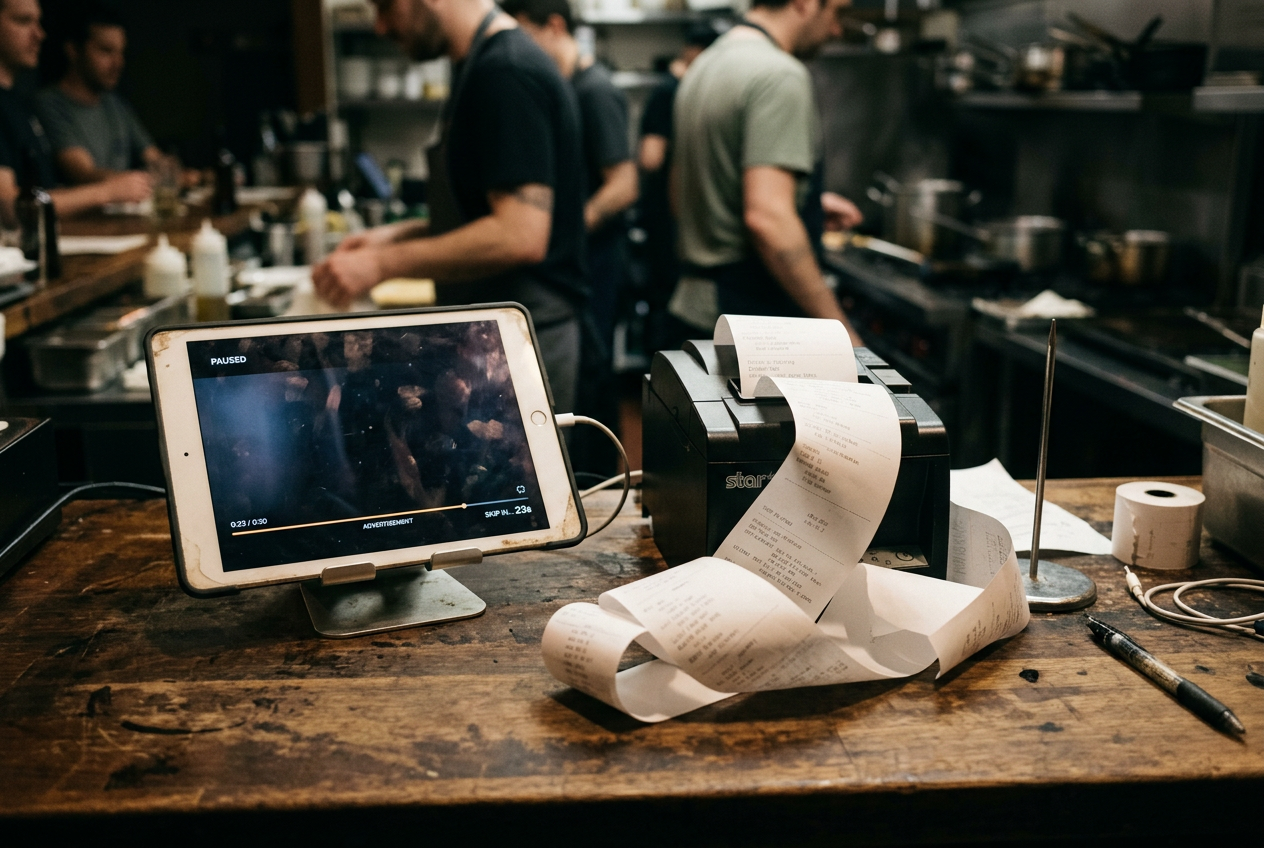
Pause ads convert a viewer-controlled break into a fresh commercial slot. The program stays frozen, but its composition and your control of the screen do not.
August 28, 2026 · 7 min read
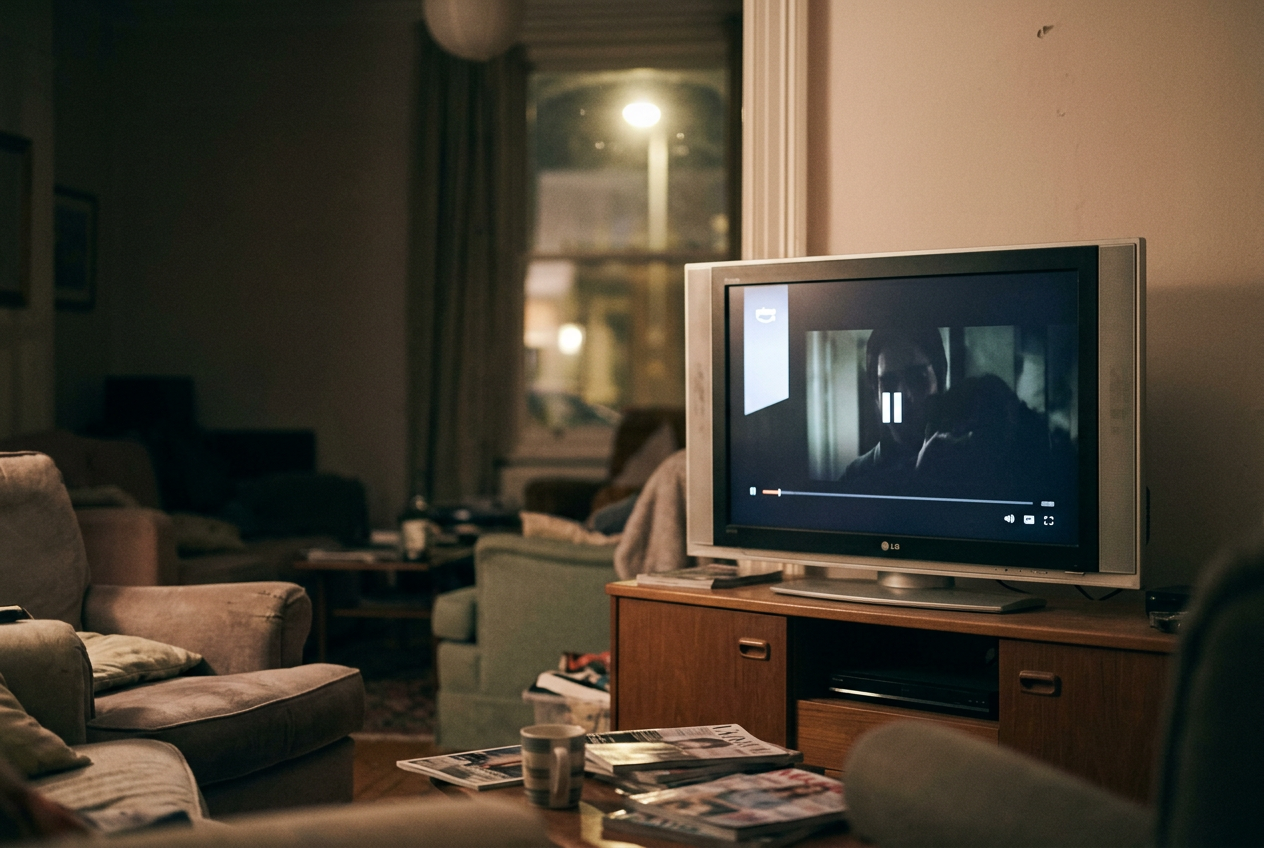
Netflix did not invent the pause button, the ad-supported streaming plan or the television left glowing while somebody goes to the bathroom. It found a way to invoice the combination.
In its advertising materials, Netflix describes pause ads as a format triggered when a member pauses playback. The company tested the format with brands including Coca-Cola and Ford before expanding it within its advertising operation. The show stops. A brand arrives.
Nobody has to locate a conventional break in the episode because the viewer has supplied one by pressing a button.
That last part matters. A commercial break is scheduled by a distributor and built into the running time or delivery package. A pause begins as an instruction from the viewer. Netflix turns that instruction into inventory, meaning a unit of screen exposure it can sell to an advertiser, while preserving the technical fiction that playback remains under your control.
You may leave whenever you like. The television, less so.
The frozen frame now has a second owner
Take the Coca-Cola test identified in Netflix’s own announcement. The exact campaign creative matters less than the arrangement: one of the world’s largest advertisers enters after the viewer has stopped the program, using a playback state that previously belonged to the interface and whatever accidental frame happened to be frozen beneath it.
That frame was never neutral. Pause a drama during a cut and somebody’s eyelids may be halfway down. Stop during a pan and the image can blur. Land on a close-up, though, and the television holds a face that a director, cinematographer, production designer and colorist spent time constructing.
The conventional pause screen adds controls to that image, but those controls refer to the work. They show where you are, how much remains and how to resume it.
A pause ad introduces a separate visual priority. The frozen program becomes context for a commercial asset whose typography, logo and call to action have been designed to win the same rectangle. Depending on the implementation and device, the interface may resize, dim or share space with the paused image. Netflix is not recutting the master file, but it is recomposing the final display after the filmmakers have delivered it.
That distinction protects the platform more than the picture. The original composition still exists untouched on a server, which is comforting in the way an undamaged painting in storage is comforting while somebody hangs a sales placard across its reproduction. What viewers encounter is the display-level composition, and Netflix controls that layer.
The Coca-Cola test makes the hierarchy plain. A paused scene becomes a substrate. The brand receives deliberate placement; the program gets whatever frame the viewer happened to catch on the way out.
The interruption follows you out of the scene
Streaming once sold itself through subtraction. No schedules. No bundles full of channels you did not want. No commercial breaks cutting into the thing you did.
Much of that language has softened as growth has become harder and ad-supported plans have given platforms another source of revenue beyond monthly fees.
Pause advertising is unusually efficient within that retreat because it does not need to seize active running time. Netflix can say the episode has not been interrupted. Technically, it has not. The clock is stopped.
Formally, the interruption has moved somewhere more intimate. The viewer pauses to answer the door, read a subtitle more closely, discuss a plot point or leave the room. Each action creates a small pocket of control, and the platform fills that pocket with paid material. The ad is not between scenes.
It colonizes the moment you tried to leave.
This changes what a pause means. A pause used to suspend the transaction between viewer and service while keeping the work ready. Under the advertising model, suspension becomes another state to monetize, alongside browsing, autoplay and the credits Netflix routinely compresses beneath recommendations. The platform does not need your continuous attention if it can assign commercial value to your temporary absence.
The bathroom break is especially useful because the television may remain visible to somebody else in the room. Even an empty room has value in advertising logic: the screen is on, the device is known and an impression can be served. An impression is the recorded delivery of an ad, although delivery does not prove that a human watched it, absorbed it or returned from the kitchen before it disappeared.
Netflix’s brand documentation naturally emphasizes the format’s visibility and engagement potential. It is less interested in the ontological status of a person brushing their teeth down the hall.
An idle television is no longer idle
The economic mechanism is straightforward. An advertiser pays Netflix for access to members on an ad-supported plan. Netflix uses playback and account signals to decide when eligible advertising can appear, delivers the creative through its interface and reports performance according to the campaign’s terms. The show secures the audience; the pause creates another chance to sell access to it.
Netflix gets the direct advertising revenue. The brand gets placement inside an environment whose appeal was built by films and series. The company’s public materials do not indicate that a director, editor or production designer receives a separate payment each time a pause ad occupies the presentation of their work.
This is a small example of a larger streaming shift. Once subscription growth alone stops satisfying the business, the interface becomes a field of undeveloped property. Search results can carry sponsorship. Home screens can foreground paid placements.
Ads can enter live programming, conventional breaks and now inactivity itself. Every state acquires a yield.
Pause ads have another advantage for Netflix: the viewer triggers them without choosing them. The platform does not have to predict the most tasteful point in a scene or persuade a producer to structure an act break. It waits for an input. That gives the ad system a clean event to recognize while transferring the aesthetic cost to chance.
A conventional midroll can at least be positioned near a cut or chapter boundary. A pause ad may arrive over a subtitle, a reveal, a dense wide shot or a performer’s face, because people pause at the exact moment they need to inspect or escape something. The format targets the frame’s usefulness and then competes with it.
This is where the Ford and Coca-Cola tests reveal more than Netflix intended. Major brands were not merely trying a new billboard. They were helping establish that a user command could double as an advertising signal, giving Netflix another commercial surface without increasing the nominal number of minutes inserted into an episode.
The cheaper alternative is restraint
There are less invasive ways to handle an idle screen. Netflix could leave the paused frame under restrained controls. It could switch to title artwork after a long period, preserving the immediate pause for reading and inspection. It could let filmmakers designate protected sequences, or let viewers dismiss pause advertising for the rest of a session.
None of those options extracts as much value from the first available pause.
A frequency cap, a rule limiting how often one viewer receives an ad, could prevent the format from appearing every time somebody stops and starts an episode. Clear caps would reduce annoyance without fixing the deeper issue: Netflix has reclassified an act of viewer control as a commercial opportunity. The company can make the takeover polite. It cannot make it neutral.
The cost to the viewer is not another full minute of ads. It is a smaller loss, repeated across the interface. You lose the clean frozen frame. You lose confidence that a button does only what its label says.
You also lose a little of the distinction between watching a program and operating a shopping surface, which is useful to Netflix precisely because the difference once helped make streaming feel better than television.
Return to that Coca-Cola placement. The drink company buys a designed image at the moment the episode has been reduced to an accidental still. Netflix sells the contrast. The pause button produces the location.
You produce the timing.
The alternative costs Netflix unsold inventory, which is why restraint is unlikely to arrive through an advertising presentation. It would have to come from customer resistance, creative leverage or a product decision that treats temporary absence as part of watching rather than a defect in monetization.
Until then, the most honest playback control may be the power button. That leaves Netflix with no glowing rectangle to sell.
Questions people ask
What are Netflix pause ads?
Pause ads are commercial messages that can appear when a member on an eligible ad-supported Netflix plan pauses a film or episode. Playback remains stopped while the interface uses the idle television screen for branded creative, turning a viewer-initiated break into sellable advertising space.
Do pause ads interrupt the running time of a show?
They do not consume running time because the program is already paused. They still interrupt the viewing experience by competing with the frozen frame, playback controls and any subtitle or visual detail the viewer stopped to inspect.
Who gets paid when a Netflix pause ad appears?
The advertiser pays Netflix under the terms of its campaign, and Netflix controls delivery through its advertising system. Netflix’s public brand materials do not suggest that the filmmakers or craftspeople responsible for the paused image receive a separate payment tied to each pause-ad impression.
Can viewers avoid Netflix pause ads?
They apply to eligible viewing on Netflix’s ad-supported service, subject to the company’s rollout, device support and campaign delivery. Choosing an ad-free plan, where available, or turning off the television removes that advertising surface; pressing pause no longer guarantees a clean frozen frame.
One update a day
Today's story, in your inbox
One story each morning — no hype, no filler, no algorithm deciding for you.