Disney Deleted Willow, and There Is No Legal Backup
A removed original may survive as a rental, a library disc or an ad-supported rerun. Willow shows the uglier outcome: copyright remains, but the audience gets no authorized copy.
August 27, 2026 · 8 min read
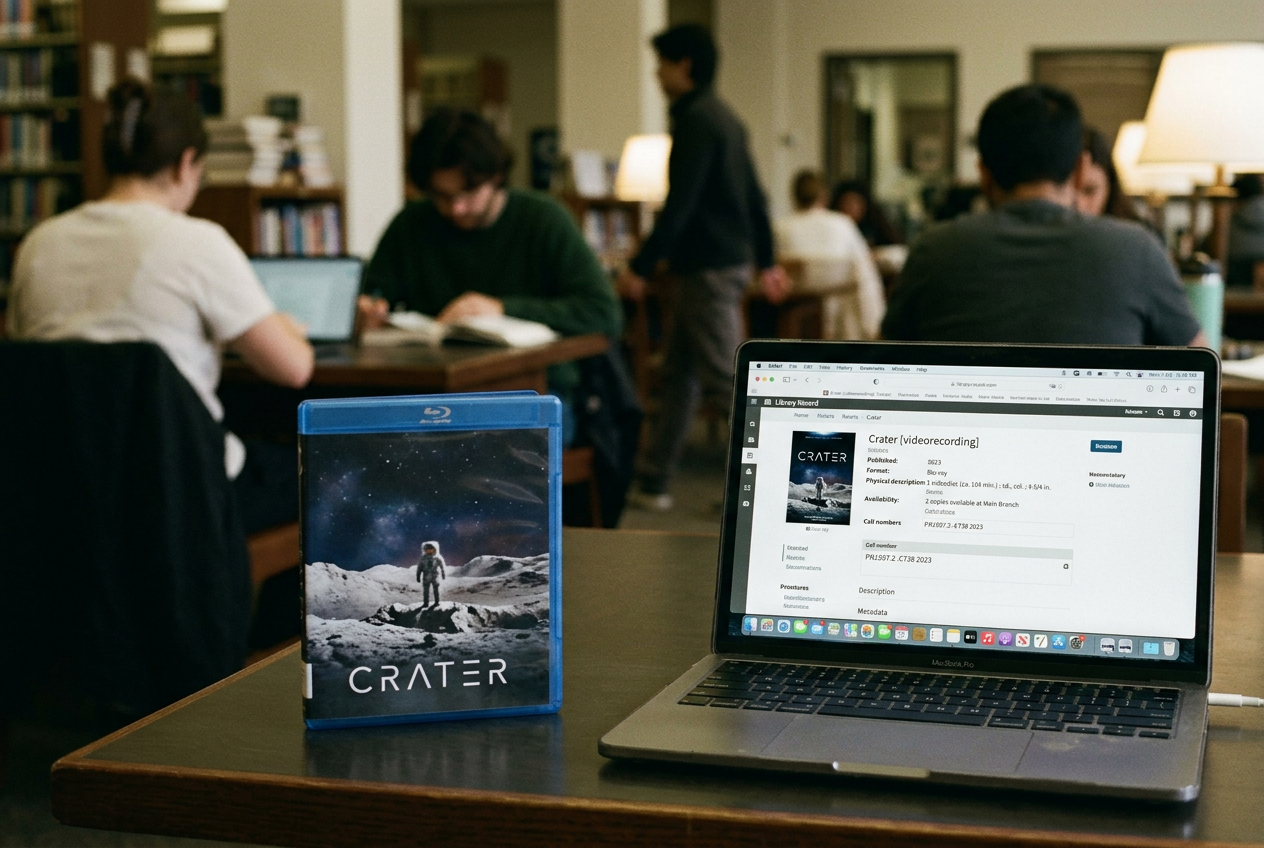
A Disney Movie Club Blu-ray of Crater is the useful object here. Disney released the lunar coming-of-age film as a Disney+ original, removed it within weeks during the company’s 2023 content purge, then allowed it back into the world through digital storefronts and a limited physical edition. The disc is ordinary: a movie pressed onto plastic, packaged for sale, carrying a barcode that lets libraries catalog it and owners lend it without asking Disney’s server for permission.
That ordinariness now looks luxurious.
When a streaming service deletes an original, viewers tend to assume the title has moved into some vast secondary catalog. Search Apple TV. Try Amazon. Check the library.
Perhaps another service bought it. This works for Crater, with caveats, and for several former HBO Max titles. It does not work for Disney’s Willow, whose eight-episode season was removed in 2023 without a purchase edition, another licensed streaming home or a disc release.
The difference is not popularity or artistic merit. It is whether the copyright owner has built a second legal route to the screen. Streaming exclusives often arrive without one because exclusivity was the product: the show existed to make a subscription look necessary, not to become an object customers could own. Once the subscription service decides the show no longer helps, there may be no distribution machinery waiting underneath it.
The four exits from deletion
A removed original can survive in a few distinct ways. It may enter a transactional video-on-demand store, where “buy” usually means acquiring a revocable account license rather than owning a transferable file. Its owner can license it to another subscription or free ad-supported service. A physical edition can remain in stores, used markets and libraries.
Previous purchasers may also retain access through a digital locker, though that access depends on the retailer, its contracts and its continued operation.
These routes are not interchangeable. A film available to rent nationally is merely inconvenient. A season preserved only on an out-of-print disc may be scarce and expensive, yet a lawful copy still exists in circulation. A show with no authorized stream, storefront listing or physical release is effectively unavailable, even while its owner continues to enforce the copyright that prevents anyone else from distributing it.
Libraries expose the distinction. A public library can buy a commercially released DVD or Blu-ray and lend that copy under the first-sale doctrine, the US rule that lets the owner of a lawful physical copy resell or lend it without fresh permission. Libraries cannot turn a household streaming subscription into a circulating collection. For digital lending, they need a distributor willing to license the title on institutional terms.
No edition means no acquisition. The library cannot preserve a press release.
Crater escaped, narrowly
Disney+ released Crater in May 2023 and removed it the following month as Disney cut scores of films and series from its services. Public reporting tied the purge to a content impairment charge, an accounting recognition that titles were worth less to the company than previously recorded, along with a broader attempt to reduce expenses.
The accounting term caused understandable confusion. Writing down content does not automatically require a studio to erase every copy or prohibit every future license. The owner still makes the distribution decision. Tax and accounting treatment can influence that decision, but “a write-off made it illegal to show” is too neat a story for a business built from contracts, rights windows and territory-specific deals.
Crater later appeared on major digital rental and purchase stores. Disney also issued the Movie Club Blu-ray, creating a copy that could enter library collections and survive the eventual closure of that mail-order club. WorldCat, the shared catalog used to locate library holdings, records physical copies in circulation, though a catalog record does not mean one sits at every neighborhood branch.
That disc changes the verdict. Crater is no longer easy in the way a heavily promoted subscription title is easy, but it is legally obtainable. The customer may pay for a rental or track down a disc. A library may move a copy through interlibrary loan.
Availability has degraded. It has not collapsed.
The escape was also narrow. A limited club edition offers less resilience than a wide retail release because fewer copies enter circulation, and used sellers can charge whatever scarcity permits once new stock disappears. Still, the barcode matters. Disney can remove a storefront listing later; it cannot remotely recall every lawfully purchased Blu-ray from a shelf.
Willow reached the wall
Willow is the cleaner example of effective unavailability. Lucasfilm’s sequel series premiered on Disney+ in 2022 and disappeared during the same 2023 purge, only months after its season ended. It had been financed, marketed and delivered as exclusive subscription programming. Disney did not establish a parallel digital-purchase edition, release the season on disc or publicly announce a new licensed home.
Search results can make this look less absolute than it is. They surface the 1988 film, soundtrack releases, trailers, recap pages and retailer placeholders. None supplies the removed series. Aggregators also preserve stale watch links after a service changes its catalog, producing the interface equivalent of a locked door with an illuminated sign.
Libraries have no special passage through that door. Without an institutional streaming license or physical edition, they cannot acquire the series as a normal collection item. An archive may preserve material under narrow legal arrangements, and researchers may eventually gain supervised access somewhere, but archival preservation is not public watchability. A viewer looking to watch episode one at home has no authorized transaction to make.
This is where “hard to find” becomes misleading. Difficulty implies a long search ending in a copy. Willow currently ends in permission withheld.
Infinity Train survives in pieces
Warner Bros. Discovery’s removal of Infinity Train from HBO Max in 2022 produced a different result. The animated series vanished from the subscription service and official online material was also pulled, yet episodes remained available for digital purchase through major storefronts. Cartoon Network had released the first two seasons on DVD, and those editions entered retail and library circulation.
The preservation is incomplete. Later seasons did not receive equivalent physical releases, so their lawful availability depends more heavily on digital retailers maintaining licenses and customer access. A “purchased” season cannot be donated to a library, sold to another fan or moved onto an independent player. It lives inside an account.
Still, the purchase button gives the rights holder a continuing transaction and the viewer an authorized route. Infinity Train demonstrates that removing a title from subscription does not require suppressing every other format. Warner chose to keep some storefront distribution alive, even while making the series harder to discover and separating it from the service that had presented later seasons as originals.
The result is a fractured object. Two seasons have discs that libraries can preserve. The rest have retailer licenses. The series exists, but its most durable format stops halfway through.
Westworld became inventory again
Westworld had more exits. HBO removed the series from HBO Max in late 2022, a startling move for a lavish drama once treated as a pillar of the network’s future. Warner Bros. Discovery subsequently included it in licensing arrangements for free ad-supported streaming television, or FAST, where scheduled channels and on-demand catalogs are funded by commercials rather than subscriptions.
The series has also had digital purchase listings and complete-season physical releases. Libraries acquired those discs, while used copies continue circulating independently of Warner’s current streaming strategy. FAST availability can rotate as contracts expire, but the discs do not share that clock.
This was less an erasure than a change in extraction. A title that no longer justified its place inside the company’s premium subscription pitch could earn licensing revenue elsewhere, carry advertising or continue selling by season. Warner’s rhetoric around HBO Max had trained viewers to see the service as a permanent home. Its balance sheet saw a warehouse with movable inventory.
That distinction explains why prestige offers little protection. A platform keeps an original while the title supports subscriptions, advertising, licensing income or some broader corporate strategy. Cultural status may influence the calculation, but it does not create a public right of access. The owner can move the work to a less convenient window, or decline to open another window at all.
Ownership without availability
The removed-original problem begins earlier than the purge. Streamers commissioned shows without promising physical editions, permanent purchase options or deposit in publicly accessible archives. Viewers accepted subscription access as if it were a library, while studios retained the control of a private warehouse.
That model works for the owner because each route can be switched on separately. Subscription access might help retain customers this year. A digital sale might produce more value after removal. A FAST deal can monetize an older catalog without restoring it to the premium service.
If expected revenue does not cover residual payments, delivery work, rights clearances and the administrative cost of keeping a title active, the owner can leave the work dark.
The people who made the show cannot generally release it themselves. Writers, directors and actors may receive residuals, which are payments triggered by specified reuse under union agreements, but those agreements do not transfer distribution rights to them. Fans cannot buy rights merely because the platform has stopped exploiting them. Copyright protects the owner during inactivity as firmly as it does during a global launch.
This is why the Crater Blu-ray keeps returning as more than collector bait. It is a lawful copy that has left the controlled environment. Willow never received that exit. One can be lent across a library desk after the app, retailer or rights department changes course.
The other remains finished, copyrighted and unavailable behind an owner’s refusal to offer a button.
Questions people ask
Can
I legally watch a streaming original after it is removed?
Yes, if the rights holder still offers it through a rental or purchase store, licenses it to another service, or released a physical edition. Crater, Infinity Train and Westworld retain at least some of those routes. A removed title with none of them may have no lawful public viewing option.
Does buying a movie digitally mean I own it permanently?
Usually not in the same sense as owning a disc. A digital purchase generally licenses viewing through an account, subject to the retailer’s technology and agreements with the rights holder. Past buyers may keep access after a listing disappears, but they cannot normally resell the license, lend it through a library or copy out an unencumbered file.
Can a public library get a removed streaming show?
Only if a lawful lendable edition or institutional license exists. Libraries can buy released DVDs and Blu-rays, then preserve and circulate those copies, but they cannot lend a consumer streaming login. With no disc and no library-market digital license, a series such as Willow leaves ordinary libraries with nothing to acquire.
Does a tax write-off force a streaming service to delete a show forever?
Not as a general rule. Accounting charges and tax treatment can shape whether a company expects to exploit a title, but distribution depends on the rights, contracts and choices attached to that production. Crater returned through rentals and disc after Disney’s purge, which is why the physical copy is evidence, not a loophole.
One update a day
Today's story, in your inbox
One story each morning — no hype, no filler, no algorithm deciding for you.